Friday, September 22, 2023

Episode Rankings: Assassination Classroom

Assassination Classroom was just a really pleasant and satisfying anime in pretty much every sense of the word. It boasts a vast and stellar cast that managed to impressively all get enough screentime and development, it has an inventive premise and a compelling plot that feels really well-planned out, it's long enough to feel like I didn't get short-changed but not too long that it overstays its welcome, and while it stumbles every once in a while, it absolutely sticks the landing. It's just such an easy show to watch, and an easy recommendation for anyone who somehow hasn't seen it yet. Here's my ranking of its episodes:

  1. Graduation Time (S2.24)
  2. Outcome Time (S2.18)
  3. Secret Identity Time (S2.14)
  4. Action Time (S1.18)
  5. Discord Time (S2.15)
  6. Karma's Time, 2nd Period (S1.20)
  7. Confession Time (S2.16)
  8. School's Out, 1st Term (S1.16)
  9. Future Time (S2.25)
  10. Happy Birthday Time (S2.22)
  11. Nagisa Time (S1.22)
  12. Past Time (S2.16)
  13. Pandemonium Time (S1.19)
  14. Let Live Time (S2.13)
  15. Talent Time (S1.13)
  16. Spinning Time (S2.04)
  17. XX Time (S1.21)
  18. Trust Time (S2.21)
  19. School Trip Time, 2nd Period (S1.08)
  20. Final Boss Time (S2.23)
  21. Island Time (S1.17)
  22. School Festival Time (S2.10)
  23. Grown-Up Time (S1.04)
  24. End-Of-Term Time (S1.15)
  25. Think Outside The Box Time (S2.12)
  26. Transfer Student Time (S1.09)
  27. Leader Time (S2.04)
  28. Ball Game Tournament (S1.12)
  29. School Trip Time, 1st Period (S1.07)
  30. Karma's Time (S1.03)
  31. Reaper Time: Part 2 (S2.08)
  32. Vision Time (S1.14)
  33. End Of Term Time, 2nd Period (S2.11)
  34. L And R Time (S1.10)
  35. Valentine's Day Time (S2.20)
  36. Kaede Time (S2.02)
  37. Assassination Time (S1.01)
  38. Assembly Time (S1.05)
  39. Reaper Time: Part 1 (S2.07)
  40. Itona Horibe's Time (S2.03)
  41. Transfer Student Time, 2nd Period (S1.11)
  42. Baseball Time (S1.02)
  43. Summer Festival Time, 1st Period (S2.01)
  44. Test Time (S1.06)
  45. Before & After Time (S2.06)
  46. Outer Space Time (S2.19)
  47. Round Two Time (S2.09)

Assassination Classroom (Season 2)

Season 1 of Assassination Classroom was a very pleasant surprise, and everyone I know says the second and final season is even better. So that means Season 2's gotta be an unconditional improvement, right? Well, not really, but it was still really good. 

The first half of Season 2 of Assassination Classroom was honestly really mixed in terms of quality, arguably the weakest stretch of episodes across both seasons. Where Season 1 felt purposefully crafted to introduce and develop each class member at a good pace, and even the early episodes set up plot points that would get resolved by the end of the season, Season 2A jumped between inconsequential standalones and important plot episodes at an almost disjointed pace and an uneven level of quality. There were absolutely some high points throughout the first half, like the hilarious codename episode and the finals arc that capped off the cour, and the fact that the cast had all been introduced meant the show could play around with fun combinations of characters. However, there were also plenty of low points, most notably the way some antagonists were forgiven way too easily. Both Nagisa's mom and Asano Sr were let off super quickly like they hadn't been committing constant abuse to their respective kids and it really left a bad taste in my mouth.

Thankfully, the moment Season 2B started, the season took a massive spike in quality as all of the show's biggest plot points finally reached a head. The moment the second cour starts, we get a wild three two-parters in rapid succession, each progressively pulling back the curtain on the series' backstory, irreparably changing the viewers' perceptions of certain characters, and completely shifting the course of the series from "kill Koro-Sensei" to "save Koro-Sensei". It's a truly stellar streak of episodes that bring back that feeling of everything being meticulously planned out that the first half of the season had been missing. While the rest of Season 2B wasn't quite as intense and mind-blowing, it brings the series to a really satisfying and emotional conclusion that wraps everything up on a nice bow and even corrects some of 2A's issues like giving Asano Sr the proper comeuppance. While it had some bumps getting there, Season 2 of Assassination Classroom very much sticks the landing.

Highlights

Secret Identity/Confession Time: So you know that meme about the Top 10 Anime Betrayals? Yeah, Kaede Kayano's betrayal was voted as #1 by Japanese audiences, and it's not hard to see why. It's a great twist that was set up remarkably, and Class 3-E dealing with her turnaround and racing to save her from her own tentacle implants is both compelling dramatic and tense (and briefly hilarious when Nagisa snaps her out of it by kissing her). It also opens the floodgates for...

Confession/Past Time: ...Koro-Sensei's past finally being revealed! Like with the Kaede twist, it feels entirely planned out from the very start and everything makes sense in hindsight. Koro being the original Reaper and the one from earlier in the season being his protege, sure! The promise Koro made being to the previous teacher of 3-E (and Kaede's sister), makes sense! Koro-Sensei having to uncontrollably destroy the Earth unless he's put down, makes his original deal make all the more sense.

Discord/Outcome Time: Assassination Classroom: Civil War! In case the Kaede and backstory arcs weren't good enough, we get this fantastic storyline about Class 3-E facing off against each other to decide whether they should kill or try to save Koro-Sensei. It's the perfect blend of fun action and compelling drama, and utilizes the entirety of the cast so well that it's hard for me to care. And the big fight between Nagisa and Karma absolutely lived up to expectations, stellar choreography, banger music, and two season's worth of character build-up paid off in spectacular fashion. 

Happy Birthday Time: RIP Koro-Sensei's cake, you will be remembered.

Graduation Time: What can I say about this episode that hasn't already been said? Graduation Time is pretty much an episode-long farewell to Koro-Sensei as the students finally have to kill them, and it's incredibly sad. It took a bit to really get me but once everyone started to break down in tears by the end, even the hard-headed ones like Terasaka and Karma, it did make me tear up.

Future Time: Future Time is a good, satisfying finale that ends everything on a satisfying note, maybe even a bit too satisfying? Nagisa's parents getting back together is admittedly kind of ridiculous, but otherwise, Asano getting kicked off and starting a cram school, Class 3-E using the bounty to buy the classroom, and Nagisa becoming a teacher like Koro-Sensei are good endings. I especially like the time jump and how melancholic it feels.

Dishonorable Mentions:

Round Two Time: Why did Nagisa forgive his mother? She physically and verbally abuses him, forces him to dress up and look like a girl, guilt-trips Nagisa relentlessly, drugs him, tries to force him to commit arson, and Nagisa ends up forgiving her?! Why does anime keep doing this, man?

Overall, Season 2 of Assassination Classroom is a season with high highs and low lows. While it suffers a slow start, some poorly-executed redemptions, and some occasional weak standalones, the cast is as fun to watch as always, and it still manages to end the series on the best possible note with a truly stellar second half.

4/5 Stars

Tuesday, September 19, 2023

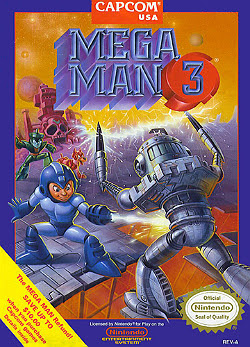
Why I Love Mega Man 3

To this day, Mega Man 3 remains the most ambitious game in the Classic Mega Man series. A space-trotting adventure with a twisty high stakes story, stunning spritework, a dramatic soundtrack, lots of gameplay improvements, complex level and boss design, and more stages than any other classic entry by a decent margin, all crammed into a single NES cartridge. Needless to say, Capcom wasn't quite able to accomplish everything they were hoping for, with an infamously rushed development that left the game unpolished, lacking an intro, and very divisive among fans. That being said, Mega Man 3 still manages to be far and away my favorite Classic Mega Man game and one of the easiest entries in the series for me to replay, refining and perfecting pretty much everything I love about Mega Man as a franchise.

On pretty much every level, Mega Man 3 feels like an expansion of the ideas and mechanics of the first two games, and that all starts with the story. The first two games mostly just had the same core plot of Mega Man taking out some Robot Masters before going for Wily himself, even with the latter's weird alien twist. MM3, on the other hand, goes far wider in its scale, even with its missing intro. Dr Wily has turned a new leaf and is pretending to team up with Dr Light and Mega Man only to predictably double-cross them, the Robot Masters are stationed on different planets forcing Mega to travel through space to fight them, and Proto Man gets introduced as an enigmatic rival who helps Mega just as much as he tries to fight him. It all culminates in that fantastic final cutscene where we go through all of Dr Light's Robot Masters before learning that Proto Man is one of them, making him Mega Man's brother. For an NES game, this twist is absolutely wild, right up there with the Dedede twist in Kirby's Adventure, and is the first semblance of lore and continuity in the whole Mega Man franchise. Is this the best story in a classic Mega Man game? Probably not, I'm partial to the Bass arc myself, but it's definitely the best in an NES Mega Man game and a big step forward for storytelling in platformers, wrapping up that original trilogy of Mega Man games in fantastic fashion.

Mega Man 3 also makes some pretty massive strides when it comes to gameplay, arguably an even bigger jump from MM2 than that game was to the first. The obvious standout was the slide which is easily my favorite addition in the whole classic series for how much it expands upon the combat and level design. I love a good quick dodge, and the slide strikes that perfect balance of helping you get out of tight situations while also not being a freebie. It still requires good timing to use properly. You can also use the slide to speed yourself up a bit and jump out of it to keep the momentum going, the levels start tossing in moments where you need to time when you slide through a gap to avoid getting hit (Needle Man being the highlight in this aspect), and the slide even allows for one-way entry points that may hide collectibles or alternate paths. It's such a versatile mechanic and a Mega Man game just feels incomplete without it to me. 

MM3 also adds Rush who basically serves as a substitute for the Items from 1 and 2, but infinitely better in every way. Where the Items previously felt kind of random and out of place, them all being implemented in a robotic dog that accompanies you throughout the adventure puts them into a stronger context while also being far cuter. MM3 also gives you items simply for beating stages rather than forcing you to find them in the levels themselves which avoids any "wait, I needed that magnet beam?" moments once you get to Wily Castle. And that's not even getting into all the little quality of life improvements like Mega Man's slipperiness being completely gone, the weapon menu letting you gauge your surroundings while you pick your weapon (a decision the next three sequels would completely regress on), the increased amount of E-Tanks you can hold, and the complete lack of bosses that straight-up require a weapon that isn't the Mega Buster. It feels like Capcom pinpointed every single issue with MM1 and MM2 and fixed pretty much all of them.

And all that isn't even getting to the levels, which stand out as some of my favorites in the entire franchise. The Robot Master stages are diverse, creative, dynamic, and most importantly, difficult. Snake Man's stage is an easy standout for its unique snake theming and high-in-the-sky final third, but there's also the brilliantly bizarre Gemini Man's stage, the slide-heavy Needle Man's stage, the magnet-themed platforming puzzles in Magnet Man's stage, and the tight but incredibly satisfying gauntlet that is Spark Man's stage. There isn't a weak link in the game, every Robot Master stage is an absolute blast. The Robot Master fights themselves are also stellar, with attack patterns that are incredibly satisfying to dodge. I love how satisfyingly Magnet Man and Top Man's homing missiles align themselves, how unpredictable Shadow Man and Needle Man are, how much strategy goes into figuring out Snake Man's moveset, and especially how Gemini Man's clones basically turn his fight into a game of jump rope. Even when you have their weaknesses, these fights also don't instantly become easy either. MM3's bosses are designed to keep you on the move and force you to think about how to best utilize your weapons to take them out, almost feeling like a dance at points. The weapon lineup itself is admittedly not one of the better ones, but something I do love about it is the fact that this is the last game in the series to have a ton of different weakness chains. From 4 onward, there'd really only be one set chain which is a real shame because the multiple boss weaknesses in 3 makes it especially replayable.

Once you're done with the Robot Masters, Mega Man 3 introduces the Doc Robot stages, which task you with revisiting four of the stages to fight eight more Wily bots with the movesets of the Mega Man 2 bosses. For some, these stages are obvious padding that bring the difficulty up to unmanageable levels. For me, these stages are low-key my favorite part of the game. Many Mega Man games have tried to figure out how to extend their length while sticking to eight Robot Masters, and I thought revisiting modified versions of old stages was actually a pretty great idea. It lets the developers further explore many of the game's level gimmicks with the knowledge that you're guaranteed to have all the weapons and Rush abilities, while also having far more visual variety than eight castle stages in a row (looking at you, Mega Man 4-6). So we have cases like Needle Man throwing in a full Rush Jet section and Spark Man mixing in new gimmicks like the rotating wheels with all the ones from the original version of the level. On top of that, MM3 even throws in some environmental storytelling showing the passage of time, like how Shadow Man's lavaflow has decreased, Spark Man's fencing is in tatters, and coolest of all, the Giant Metalls teased in the original version of Needle Man's stage have now been deployed and are being used against you as minibosses. And the Doc Robot fights themselves honestly aren't that bad? They're not too different from the Hard/JP version of Mega Man 2, and frantically trying to figure out each one's new weakness is a fun change of pace. As for the Wily Castle itself, it's admittedly on the easy side, but for me, that still makes it a pretty fun victory lap coming off the far tougher Doc Robot stages. And as I said in my original review, I would much rather have an easy Wily Castle stage than whatever Mega Man 2 did.

On top of all of that, Mega Man 3 looks and sounds fantastic. Mega Man 2 had its good-looking moments, but from 3 onward, the series would join the upper ranks of some of the prettiest NES games out there, with detailed and colorful spritework and a clear and consistent art direction. MM3 looks so good, in fact, that it causes the original NES version of the game to lag a lot. In most cases, this would absolutely be a bad thing, but there's an official port that removes all lag in the form of the Complete Works version of the game. The soundtrack is also top-notch, up there with 5's and 8's as one of my favorites of the classic series. The music in MM3 by Yasuaki and Harumi Fujita has such a grand and epic vibe to it, and many of its themes are remarkably complex and lengthy. From melancholy tracks like the title theme and Wily Castle 2, to more adventurous tracks like Hard Man and Needle Man, to some of the series' most badass tunes like Spark Man and series highlight Snake Man, Mega Man 3's soundtrack does a phenomenal job of capturing each stage and the emotions at play in the story.

Overall, Mega Man 3 isn't without its flaws, but it's still my favorite Classic Mega Man game for managing to be more than the sum of its already great parts. It's an ambitious title with a massive scope for an NES game, tons of gameplay improvements, some of the most complex and memorable levels and bosses in the series, loads of replayability with the multiple weakness chains, stunning visuals and music, and an experimental second half that really landed for me. To this day, no other classic Mega Man feels like it's trying this much to punch above its weight, and it does one hell of a job at it.

Tuesday, September 12, 2023

Soundtrack Retrospective: Castlevania

Castlevania is another series I've been getting more into recently and it's really great. Even though I slightly prefer the Igavanias, the classic games are pretty stellar. As a whole, the series kept a pretty solid level of quality and the same applies to its generally phenomenal music. So it's about time for another Soundtrack Respective going over the music for the 2D Castlevania games (haven't played the 3D ones yet):

Castlevania: The first Castlevania game is incredibly solid on pretty much every level. Thoughtful level design, good difficulty curve, and consistently good soundtrack from start to finish. However, my biggest issue with CV1's music is the same issue I have with the game as a whole: It's too short. The entire score clocks in at a measly 13 minutes, and many of the songs don't even last a full minute, which just doesn't bode well compared to its many successors. That being said, for what it is, Castlevania does still have great music, and lots of catchy tunes that establish the spooky funk tone that the whole series would continue to stick to.

Highlights: Vampire Killer is the first song of what many fans call the "Big Three", the first three opening area themes that have shot up in popularity to become the most iconic tracks in the franchise. Personally, all three of them fall into Wily Castle 1 syndrome where I recognize their greatness but find them all a tad oversaturated when there are so many other amazing Castlevania themes out there... but that still doesn't mean Vampire Killer isn't the best track in this game in particular.

3/5 Stars

Castlevania II: Despite being a far worse game than its predecessor, Castlevania II's music is slightly better despite being just as short if not even shorter. The few tracks we do have though are a bit more complex and energetic than the ones in CV2, and you can really see Castlevania's rock influences start to show. Not really sure what else to say here, it's just some good music.

Highlights: Yeah, it's Bloody Tears. This is probably the Castlevania theme I find the most overrated, but I can't deny how hype it is.

3/5 Stars

Castlevania III: Castlevania III is the first soundtrack in the series to really knock it out the park, the vast majority of its tracks are absolute bangers. Vampire Killer from the first game had this fun funk vibe to it, so I guess Konami decided to make the entire soundtrack of the third game pretty much exactly like Vampire Killer, and it really paid off. There's also a bit more of a mysterious gothic vibe in some of the tracks like Clockwork, Nightmare, and Anxiety, and they play off with the more energetic tracks incredibly well. But what really elevates CV3's soundtrack is the Famicom version, which uses the console's improved sound capabilities to incredibly good use with some of the cleanest sounding chiptune on either the NES or the Famicom.

Highlights: AQUARIUS. Beginning is great and all, but Aquarius is like in my Top 3 tracks of the entire series. With an addictive melody, an energetic tone, and a nice dose of atmosphere, this is the definitive Castlevania track for me. Also, honorable mention goes to Mad Forest for being an absolute banger.

5/5 Stars

Super Castlevania IV: Super Castlevania IV is the most love-it-or-hate-it of the Castlevania soundtracks due to its more atmospheric tone. Either you love the vibes of it or you lament the lack of the classical-rock that defines the series. I was mixed at first, but SCIV's music is really starting to grow on me. The blend of experimental jazz, booming drums, and repetitive melodies is so unique for a video game soundtrack, with many tracks really sounding ahead of their time in how immersive and weird they are. Not every track is a home run, I find some of the boss themes noticeably weak, but when SCIV's mood hits, it really hits.

Highlights: Dracula's Theme in this game is absolutely transcendent. Those droning synths, the pattering notes, it's so haunting and melancholy making for a theme that's even wonderful to listen to outside of the game. And when Simon's theme kicks in halfway through the final battle, ah, it's so good!

4/5 Stars

Castlevania Bloodlines: Castlevania Bloodlines was the debut of Michiru Yamane, quite possibly the greatest Castlevania composer. From here on, she'd proceed to work on Symphony Of The Night, several of the handheld games, the two PS2 games, among several others. I don't think I can really mention her without saying she's gotten herself in a bit of... let's just say 2020-conspiracy-related controversies lately, which does make it a bit tough to just shower her with praise, so keep in mind that I'll specifically be talking about her music hear. Anyway...

With that being said, her debut with Bloodlines was absolutely fantastic. Yamane's blend of operatic goth and hard-hitting pop fits the vibe of Castlevania perfectly, it's almost like she was destined to make music for this series. On top of that, she manages to make the Genesis sound so good. While I find a lot of Genesis music to be a bit twangy and ear-grating, Bloodlines' music really plays to the console's strengths and dare I say rivals SCIV's soundtrack in sound quality. Speaking of which, Bloodlines continues the trend that SCIV of including the Big Three along with a stellar Theme Of Simon remix, but even with them, I still find the original level themes to be the highlight here. Reincarnated Soul, The Sinking Old Sanctuary, Iron-Blue Intention, and Calling From Heaven in particular being classics in my eyes. The only real weak spot in Bloodlines' music is that the boss themes aren't quite as good as everything else. Yamane's boss themes are generally pretty chaotic and frantic and she doesn't always pull it off, though they're still not bad! Just not as good as the high bar set by those amazing level themes.

Highlights: The Sinking Old Sanctuary isn't just my favorite Castlevania theme, it's one of my favorite pieces of video game music period. Bloodlines was my first Castlevania and until that point, all I really heard from the series music-wise was the aforementioned Big Three. So when I got to Stage 2 and I was hit by this absolutely stunning and ethereal track, I realized just how much musical range this series truly has. 

5/5 Stars

Rondo Of Blood: Rondo Of Blood is Castlevania's first CD quality soundtrack, and I cannot understate just how hard they went here. It has the same adrenaline-inducing 90s synth as Mega Man X4 (and I've already waxed poetic about how much I love that soundtrack), and pretty much every single song goes ridiculous hard. Once again, we have the Big Three here and I'd argue they have some of their finest remixes ever, but despite that, I once again think the original tracks manage to stand up right alongside if not even surpass them. Everyone loves Divine Bloodlines and Opus 13 (for good reason), but Cemetary, Picture Of The Ghost Ship, Den, and especially Cross A Fear and Slash are all fantastic in their own rights. Seriously, this whole soundtrack is that synthy Turbografx-CD sound at its absolute finest, a borderline flawless soundtrack and an easy contender for best in the series, though one other soundtrack does come pretty damn close to topping it.

Highlights: Where do I even start here? Divine Bloodlines is one of the finest opening area themes in the entire series, infectiously groovy and fun. Slash is a massive head-banger and adrenaline-pumping from start to finish. Opus 13 is just simply a massive bop. And as I said, Vampire Killer, Bloody Tears, and Beginning get some of their absolute best remixes here. But if I really had to pick my favorite, I think I have to go with Cross A Fear, which starts fun and groovy but slowly builds into one of the godliest and most powerful choruses I've ever heard. That synth lead, man, it just hits so hard!

5/5 Stars

Symphony Of The Night: Symphony Of The Night is good. It was one of the last games in the series I played though, so it and its music didn't feel quite as special as some of the games before and after, but that doesn't change the fact that it's yet another quality soundtrack from Yamane. Being the last CD-quality soundtrack we'd get for a 2D Vania, Symphony Of The Night feels like it blends Yamane's gothic and operatic stylings with the synths of Rondo Of Blood, and when it works, it works really well. Some of the best tracks in this game start off fairly simple but slowly build into a stunning climax, and there's a nice mix of genres from heavy rock to melancholic lullaby to smooth jazz. Like with Bloodlines, some of the boss themes and more atmospheric fare can be a bit more uneven, but overall, the hits far outweigh the misses.

Highlights: Lost Painting and Finale Tocatta, the two big "inverted castle" themes. They may be overused and poorly-looped within the game (especially Tocatta), but they are the two highlights of the soundtrack for me. Lost Painting is an hauntingly ethereal piece that never fails to give me goosebumps, easily one of my favorite themes in the series. Finale Tocatta, on the other hand, is a full baroque symphony that builds to one of the hardest climaxes in the franchise (shame you rarely hear in game).

5/5 Stars

Circle Of The Moon: Circle Of The Moon boasts an amazing soundtrack that takes a stellar batch of great new original themes, and blends them with phenomenal remixes of some of the best tracks in the series. And they didn't even use the Big Three this time. Along with Vampire Killer, we got Clockwork Mansion, Aquarius, and The goddamn Sinking Old Sanctuary. It's as if Konami knew what the best tracks in the series really were. While not one of the absolute best due to the aforementioned abundance of remixes, it's definitely in the upper echelon for just how quality it all is. It's definitely the best of the GBA soundtracks, and it sounds the cleanest too.

Highlights: The remix of The Shining Old Sanctuary takes one of the most beautiful and serene themes in the series and gives it a gritty rock bassline, and it works shockingly well, to the point where I don't even know if I like it more than the original. That being said, if I have to go with original tracks, I'm picking Awake, another stellar and criminally underrated opening area theme that should rank along with the best the series has to offer.

5/5 Stars

Harmony Of Dissonance: What... what happened here? Why does Harmony Of Dissonance's music sound so bad?! Circle Of The Moon's soundtrack was so good, why did this game's sound quality plummet so dramatically? From what I can tell it was because of all the visual effects on screen compared to CotM, but AoS used a similar artstyle and it sounded fine. And even if they really couldn't figure something out, how did Konami think this was okay to ship?! There are probably some good compositions here, not that I can tell when everything sounds like nails on a chalkboard. Easily one of the most accurate video game titles in history.

Update: Okay, since making this, I replayed Harmony to properly beat the true final boss, and you know what? I don't hate the soundtrack. The sound quality is certainly the weakest of the GBA games, but a game using chiptune isn't inherently a bad thing. The problem is that the composer, Soshiro Hokkai, was obviously trying to make a more atmosphere, jazzy SCIV-esque score that the console just couldn't handle, especially when Konami was prioritizing the visuals that hard. It's a shame because yeah, there actually are a lot of good compositions here and while some still manage to shine, some of them do cross the line into... well... dissonance. I don't think Harmony's soundtrack is bad or ear-grating, but I do think it was a waste of some pretty great potential.

Highlights: I gotta say, Offense And Defense is really good and I warmed up to it a lot. It's a hauntingly atmospheric track where the chiptune really doesn't hold it back all that much. It's a song that feels like what the entire soundtrack was trying to be, but was one of the few to actually reach that potential. Shame it's the track you hear the least!

2/5 Stars

Aria Of Sorrow: Aria Of Sorrow's soundtrack is good, perfectly solid Castlevania... but it's not amazing. I actually find a lot of it somewhat forgettable, which is a shame because there is a lot of really great music here, Yamane did another bang-up job. It's just that in a series like Castlevania, pretty good just isn't good enough, and it leaves Aria as the weakest of the Igavania soundtracks by quite a lot (Harmony exluded of course). The issue with Aria's soundtrack can feel quite low-key and chill, which I guess fits Soma as a character, but it makes for a decent amount of pretty forgettable themes. Aria's best music is often when it just goes full-on hard rock anyway, so I kinda just wish it did that more instead. Either way, still a good soundtrack, just not as good as it should've been.

Highlights: Despite being in an otherwise weaker soundtrack, Clock Tower is amazing. This track gets a lot of hype from fans and it's absolutely deserved, starting off mysterious and melodic before turning into a heavy metal head-banger with one hell of a chorus. The following track Underground Reservoir ain't half bad either, and neither is the catchy Top Floor theme.

3/5 Stars

Dawn Of Sorrow: Here we go! This is how it should be done! Dawn Of Sorrow's OST is everything a good Castlevania soundtrack should be. It's funky, gothic, and a consistent bop from start to finish. I'd even argue it's the funkiest soundtrack alongside Rondo which fits perfectly with Soma's cool, composed personality, but it's not too chill and muted to the point of feeling forgettable like Aria's soundtrack. Part of this is because of Masahiko Kimura who came in to compose half the soundtrack. He's responsible for the 64 games along with Dracula X, but this is easily his best work. All of his tracks rank among some of the best in the game, he nailed the Big Three remixes he was given, and he just gets Castlevania. That's not to say Yaman didn't kill it either though, she used the improved sound capabilities of the DS to great effect and the ending themes she worked on are some of her best. The DS is the peak of Castlevania musically (and gameplay-wise), but Dawn Of Sorrow's music in particular is slick and fun in a way no other soundtrack really manages to reach.

Also Amber Scenery should've been in the game, it's so good.

Highlights: Dracula's Tears is a Masahiko Kimura piece and it is one of the grooviest pieces of Castlevania music out there. It's so smooth and fun, never fails to get me bopping my head.

5/5 Stars

Portrait Of Ruin: Portrait Of Ruin is probably my least favorite of the DS soundtracks which is a real testament to how freaking good they are. Compared to Dawn Of Sorrow's more breezy tone, Portrait Of Ruin's soundtrack is heavy. The level themes are intense and hard-hitting, the boss themes are wild, and the gothic vibe is at its most unabashedly gothic. On top of that, they even brought in Yuzo Koshiro to make some tunes. Putting aside the fact that Koshiro is already a vgm legend, his soundtrack for Actraiser has been compared to Castlevania so many times that this almost seems destined. And as you'd expect, he absolutely kills it, even if he sadly didn't get to work on too much. Also, props for remixing non-Big Three tracks this time. Divine Bloodlines, Iron Blue Intention, and the Theme Of Simon Belmont are way better anyway.

Highlights: Hail From The Past is one of the best desert themes ever made. I love the ominous chime riff, the groovy melody, and that godly chorus, it's an easy Top 3 contender along with Aquarius and Sinking Old Sanctuary for me.

5/5 Stars

Order Of Ecclesia: Even by the very high standards of the past two DS soundtracks, Order Of Ecclesia still blows them out of the frickin' water. I truly cannot understate just how perfect OoE's soundtrack is. Every theme is great, every stage theme is phenomenal, and the sheer amount of 10/10 best-of-the-series tracks compressed into a single soundtrack is unreal. It has everything you'd want from a Castlevania soundtrack, from gothic rock to jazzy synth to elegant classical melodies, and yet it all manages to maintain that same dark and edgy vibe that perfectly fits one of the grimmest games in the series. It's also the longest of the 2D Castlevania soundtracks, and it never loses its quality through the whole thing. And the best part, it's almost all original. There are barely any remixes in sight. And look, I like all those iconic themes that keep showing up, but it says a lot about the quality of a Castlevania soundtrack that can stand up tall as one of, if not the best in the series entirely on its own. As I said above, I didn't think anything could top Rondo, but my god, did this one blow me away.

Highlights: What do I even pick here? Do I go with the heavy riffs of A Clashing Of Waves? The frantic tragedy of Lament To The Master? The banging rock of Sorrow's Distortion? Nah, it's gotta be Shanoa's main theme, the most iconic song in the game, An Empty Tome. It's so smooth, energetic, and perfectly fitting for both Shanoa's character and the scenes in which it plays. And the developers knew it was good, because they used it as the intro for the game to wet your appetite before it shows up halfway through. 

5/5 Stars

Castlevania: The Adventure Rebirth: Castlevania The Adventure Rebirth is a weird game for me. It's a solid Castlevania, but I just... don't get what it wants to be. It tries to be a retro revival ala Mega Man 9 but doesn't go for any defined Castlevania artstyle. It remakes one of the least-liked games in the series, but it also changes everything to the point where it's basically a completely different game. You get the improved air control of SCIV, but you can't jump onto staircases for some reason. It's all so strange to me. 

But the weirdest element here is the music, which remixes a variety of Castlevania tunes, but most of them are either from obscure entries in the series or are lesser known pieces themselves. And even more, none of the remixes are from Castlevania: The Adventure, the game this is meant to be a remake of to begin with! Well, okay, Battle Of The Holy did get a remix... that happens to be unused. And who did they even bring in to make these remixes? Manabu Namiki, who is far more associated with shmup games, FM synth, and amen breaks, none of which have anything to do with Castlevania.

That being said, despite the nostalgic anachronistic dissonance at play, we got a Castlevania soundtrack by Manabu freaking Namiki. That man is an FM god, right up there with Yousuke Yasui for me, and he really brought his A-game with these remixes. Crazy drum fills, Turtles In Time-esque orchestral hits, a lead that sounds a lot like the Sonic ring sound effect, this entire soundtrack is a hard-hitting adrenaline rush of Genesis nostalgia. Every single remix is super punchy and memorable, from the nonstop propulsion of New Messiah, to the spot-on recreations of Reincarnated Soul and Vampire Killer, to the groovy bass riffs of Lullaby Sent To The Devil and Something Loopy, to Aquarius simply being as incredible as always. And despite being unused, the Battle Of The Holy and Lost Painting remixes easily rank alongside or even surpass all the others in quality. Like with Circle Of The Moon, despite barely having an original song, the remixes are so well-executed that I rarely even notice or care. Namiki is just that good.

Highlights: Well, they're all remixes, so...

4.5/5 Stars


To cap things off, let's rank the 2D Castlevania soundtracks:

  1. Order Of Ecclesia
  2. Rondo Of Blood
  3. Dawn Of Sorrow
  4. Circle Of The Moon
  5. Bloodlines
  6. Portrait Of Ruin
  7. Dracula's Curse
  8. Symphony Of The Night
  9. The Adventure Rebirth
  10. Super Castlevania IV
  11. Aria Of Sorrow
  12. Simon's Quest
  13. Castlevania
  14. Harmony Of Dissonance

If there's one thing Castlevania soundtracks are known for, it's the first area themes. So you know what, let's rank those too:

  1. An Empty Tome (Order Of Ecclesia) - Hey, technically it counts
  2. Divine Bloodlines (Rondo Of Blood)
  3. Invitation Of A Crazed Moon (Portrait Of Ruin)
  4. Reincarnated Soul (Bloodlines)
  5. Dracula's Castle (Symphony Of The Night)
  6. Theme Of Simon Belmont (Super Castlevania IV)
  7. Awake (Circle Of The Moon)
  8. Bloody Tears (Simon's Quest)
  9. Beginning (Dracula's Curse)
  10. Vampire Killer (Castlevania)
  11. Pitch Black Intrusion (Dawn Of Sorrow)
  12. Castle Corridor (Aria Of Sorrow)
  13. Chapel Hidden In Smoke (Order Of Ecclesia)
  14. Successor Of Fate (Harmony Of Dissonance)
And to give them some extra recognition, here's my favorite non-first area themes as well:
  1. The Sinking Old Sanctuary (Bloodlines)
  2. Aquarius (Dracula's Curse)
  3. Hail From The Past (Portrait Of Ruin)
  4. Sorrow's Distortion (Order Of Ecclesia)
  5. Cross A Fear (Rondo Of Blood)
  6. Lost Painting (Symphony Of The Night)
  7. Dracula's Tears (Dawn Of Sorrow)
  8. Iron-Blue Intention (Bloodlines)
  9. Lament To The Master (Order Of Ecclesia)
  10. Slash (Rondo Of Blood)

Saturday, September 9, 2023

Why I Love Jack Bros

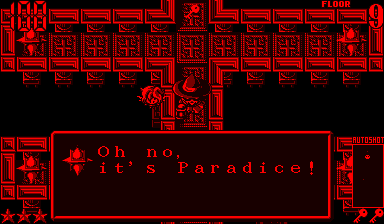
 I'm not much of an Atlus person. I respect them, there's a lot I like about SMT and Persona from a distance, but the complex mechanics and infamously high difficulty just don't do it for me. I don't like RPGs that much. That being said, there is one SMT game I love and it's probably not the one you'd expect: Jack Bros for the freaking Virtual Boy.

As a fan of underdog consoles, I've always had a bit of a soft-spot for the Virtual Boy. I can imagine it'd be absolute hell to actually use, but it's got some positives. Through some pretty impressive cheating, it managed to pull off 32-bit widescreen on a handheld five years before the GBA. It's got a great soundchip that sounds like that of no other console. And it's got a unique library full of weird experimental one-offs that try to make the most of what they're given. Games like Teleroboxer, Mario Clash, Space Squash, Insmouse No Yakata, and of course, Virtual Boy Wario Land, which really use the stereoscopic 3D to good use. But Jack Bros is special because it isn't just a great Virtual Boy game, it's just a damn good game that I absolutely love coming back to. It's a fast-paced and fluid dungeon crawler with thoughtful level design, a perfect difficulty curve, lots of replayability, banger music and tons of charm, while also using the stereoscopic 3D in some neat ways of its own. But that's getting ahead of myself, let's delve a bit deeper into why I love this game so much.

Jack Bros is a hybrid between a twin-stick shooter and a dungeon crawler, where you play as the iconic SMT enemies, the titular Jack Brothers, and blast your way through six meticulously designed dungeons before a timer runs out. The timer is the fundamental sense of tension here, because it's the only determinent of whether you win or lose. There are no lives or health systems here, getting hit only takes time away from the clock, though you can also find clocks to give you more time by fighting enemies and exploring the dungeons. While having to deal with a timer may sound annoying, I think this is overall an incredibly well thought-out system that gives the game a fun frantic pace, aided by the super tight, responsive, and intuitive twin-d-pad controls. There's a nice risk and reward element with taking the time to look around and engage with enemies at the cost of wasting time, and because all of the dungeons are hand-crafted rather than randomly-generated, you won't be starting from square one each time you fail a stage.

It also helps that the dungeon design itself is top-notch, probably the best thing about this game. Each dungeon brings a bunch of new gimmicks and ideas to the table that the game slowly doles out at a consistent rate, while also getting increasingly larger. There's spiked floors, blocks to push, warp pads, flamethrowers, locks and keys, lasers, ceilings that block you from seeing Jack, and my personal favorite, areas that will force you to hop back and forth between floors to solve a maze. Even the tutorials are used in giving Jack Bros a really tight difficulty curve. In the early stages, a Pixie will stop you to give you tips on pretty much every floor. But by the final dungeon, Pixie will pretty much dip out and force you to tackle everything you've learned throughout the game all on your own. And then there's the enemies, and man, what a lineup. Even as someone who isn't a huge SMT fan, it's hard not to recognize how much of a love letter this game is to that series' gallery of enemies. The sheer amount of new enemy types this game keeps throwing in is incredibly impressive, from archers, to centipedes, to ghosts that run away from you, to shielded knights, to cyclops that freeze you in place, to so many others. The game even gives a charming cast roll of all the enemies once you beat the game, it really does feel like their time to shine.

Jack Bros isn't all that long of a game, only really clocking in at around an hour, but it makes up for that with just how replayable it is. Befitting the name, there are three Jack Brothers to play as, each with entirely different weapons and movesets. I usually play as the balanced Jack Frost, but there's also the slower and more powerful Jack Lantern, and the knife-wielding Jack Skellton if you want a more melee-centric playthrough. But even on top of that, there's also a Hard Mode you can access via password, and by beating that, you'll get another password that lets you play as the tutorial character, Pixie. This is an insanely cool bonus and Pixie is a super powerful character, blisteringly fast and boasting some serious firepower. And on top of all that, you skip all the tutorial messages because you're playing as the tutorial character. Just brilliant.

Visually, Jack Bros looks really nice too. It doesn't push the console like something like Galactic Pinball or Red Alarm, but the spritework is super detailed and well-done. The visual highlight of Jack Bros is the fact that you can always see the successive floor in the background, and instead of finding a staircase that just warps you to the next floor, you have to find a ledge and literally jump down to the next floor. It's such a cool effect and a great usage of the Virtual Boy's stereoscopic 3D, and the game even utilizes it in some sections where you get multiple ledges and have to figure out which one to use. I also need to give props to Jack Bros's absolutely phenomenal soundtrack. Yes, even Atlus's spinoff has godly music, and Jack Bros in particular has hands down the best music on the Virtual Boy. I already praised its soundchip, but Hiroyuki Yanada displays a mastery over the chip unlike anyone else, he really makes it sing. There's a nice variety of music too, from jazzy tunes to more atmopsheric tracks, and they're all great, particularly the main dungeon themes. The Forest Of Fairies, Temple Of Nightmare, Dragon's Belly, and especially Mecha Fortress all being particularly noteworthy. But the highlight of the whole soundtrack for me is the Stage 2 theme, Grim Reaper's Cavern, which is a banger so massive that hearing it for the first time was the point when I realized Jack Bros truly was something special.

Like with Sin & Punishment, Jack Bros is a game that I have returned to time and time again for replays and it just simply never gets old. The fluid and addictive twin-stick gameplay, the immaculately-designed dungeons, the tight pacing and difficulty curve, the endless amounts of replayability, the clean visuals that play to the Virtual Boy's strengths, the awe-inducingly good soundtrack, and the super charming roster of enemies make for a condensed masterclass in dungeon crawler design. 

Assassination Classroom (Season 1)

I'm not much of a shonen person, and I'm not entirely sure what drove me to check out Assassination Classroom. That being said, I'm glad I did, because its first season was an absolute blast.

Assassination Classroom has an incredibly weird and inventive premise. It starts with a weird-looking octopus eventually named Koro shows up and blows up the moon. He makes a deal with the government to teach Class 3-E, the lowest ranked class in a prestigious junior high school, with the ultimatum that the students have to kill him in a year or else he'll destroy the Earth too. Yeah, it's wild, and there's a lot to it, but it really is a great concept in a lot of ways. For starters, the sheer concept of an "assassination classroom" is absolutely hilarious. Seeing the students randomly pull out guns and knives in class will never not be hilarious, and all the other 3-E teachers being other assassins and government employees leads to some very fun scenarios. Karasuma and Irina are very unconventional teachers, and seeing them grow into their new positions is a blast. Of course, Koro-sensei himself is a highlight of the series. Despite being a terrifying world-ending threat, he's also super charismatic and a genuinely stellar teacher who goes neurotic over helping them learn, which just leads to a super complex and fascinating character. There's this looming feeling of confliction throughout the season, where you want the students to kill Koro-sensei to save the world and win the money prize they deserve, but you also want Koro-sensei to stay alive and keep teaching them, which in turn leads to the even more interesting element of AssClass's story.

On top of being an incredibly fun story about assassination one's teacher, Assassination Classroom is also a commentary on the Japanese education system, and a really well-executed one at that. Class 3-E isn't just the lowest ranked class in the school, it's a tool the principal uses to stoke fear into its students. He posits that if the worst performing students get shunned from the rest of the school and open to discrimination, everyone else would perform well out of fear of being like them. The saddest part is that a large chunk of 3-E's students aren't actually bad learners, as we eventually learn it's more common that they're only specialized in a single subject, or that their grades fell off for personal real-life reasons. Seeing Koro-sensei desperately try to help 3-E flourish in a school designed to help them fail is just as engaging as the assassination stuff, if not even moreso. It helps that AssClass does an incredibly job at giving the whole class equal amounts of screentime. There is technically a main protagonist in Nagisa Shiota, and a great one at that, but he never overshadows the rest of the cast. Pretty much every episode shines a spotlight on another student, and the show as a whole rarely ever isolates one character from everyone else. This is an ensemble cast through and through, and the way AssClass efficiently develops its massive 22-student class in such a short span of time is probably one of its most impressive feats. 

Another impressive thing about this first season of AssClass is how well it's structured. For a show based on a manga, it's hard to even tell with how tightly-knit Season 1 is, everything gets paid off in a super satisfying manner. Nagisa spends the season taking notes on Koro-sensei's weaknesses, and they're used in the big final assassination attempt. Irina spends the season coming off as incompetent only to show the students how good of an assassin she really is in a final arc. Many episodes focus on the conflict between Class 3-E and Class 3-A, culminating in 3-E's victory in the finals. The list goes on, it's great. That being said, I do have one pretty major criticism with Assassination Classroom, an issue that I've noticed many shonen anime suffer from: Narration. You will not go an episode without Nagisa telling you that they're assassins, they gotta kill their teacher, they have a year to do it, the weapons aren't designed to kill humans, Koro-Sensei is actually a really good teacher, he moves at Mach 20, you get the point. It's exhausting. I get that shonen anime are meant for kids, but they're not that stupid. The vast majority of the narration in this series post the first episode are either things we already know or can easily imply by just... watching the show. 

Highlights:

School's Out, 1st Term: Ending the Class 3-E storyline on a high note, this episode has the students finally manage to beat 3-A on the finals (as well as getting full marks for their assassination lessons). It's a super heartwarming finale to all the school stuff and sets up the final arc in a great way when the students learn they won a summer vacation over 3-A. Also, Karma getting a reality check when he didn't do as well thanks to his cocky attitude was a great twist.

Go Time: If I had any another criticisms about AssClass's first season, it's that it is a bit on the slow side for its first half. I praised how well laid-out it is, but that does mean that a lot of the season's best moments are all in the final arc. That being said, what a final arc. Go Time has the students pull off their biggest assassination attempt yet, and it's an absolute spectacle to watch, which also makes it absolutely crushing to watch them lose when Koro pulls yet another superpower out of his ass. The second half of Go Time tosses in yet another twist when half the students all gets poisoned, with the antidote being ransomed for a frozen Koro-sensei.

Karma Time, 2nd Period: The last four episodes of the arc has the non-poisoned half of the class slowly work their way up a hotel fighting off enemies and all getting time to shine. As you can tell by the title, Karma gets a great moment here as he shows how much he's grown since his failure during the finals. But despite that, Nagisa was just as notable. I think it's really cool that the main character of an anime has a super androgynous design, and it's finally utilized here as Nagisa has to disguise as a girl to sneak through a club. It's a great sequence that shows how much of a pure cinnamon roll Nagisa is, as despite being pulled over by a drunk rich guy, he manages to talk him out of smoking and into bettering himself.

Nagisa Time: This was a good finale. Nagisa's final battle with Takaoka wasn't super crazy choreography-wise, but it got the vibes perfect. Between the compelling drama of Nagisa having to be talked out of not killing Takaoka, and the shadow-heavy visuals, the stakes feel higher than ever. There aren't really any surprises here, but the plot is resolved in super satisfying fashion.

Overall, Season 1 of Assassination Classroom really feels like a complete package. It's funny, action-packed, filled with a very lovable cast of characters, tackles the education system in a super compelling way, and ends on a fantastic final batch of episodes. It may have a bit of a slow start, and suffers from some very ham-fisted narration, but overall, this show is an incredibly good time.

4/5 Stars

Friday, September 8, 2023

Why I Love Iconoclasts

Metroid Fusion is known for being one of the most unique and niche games in the series. With a stronger focus on stealth and horror, story, and combat, along with a more linear progression, Fusion goes against a lot of the series' predefined philosophies. While this direction for the series may not be for everyone, Fusion still gained quite the cult following since it manages to accomplish a lot of its goals incredibly well. The combat and boss encounters are still some of the best the series has seen, the story is actually my personal favorite in the franchise, the setpieces and scares are memorable, and the linear structure makes for a tight and perfectly paced experience. With its rumored sequel left as vaporware and the Metroid series shifting towards 3D before going a long hiatus, there wouldn't been another game quite like Fusion for years. But of course, leave it to the indie devs to scratch that itch and then some.

Iconoclasts is an indie game made by a Swedish developer named Konjak, who had previously been known for the ridiculously bombastic Noitu Love series. Those games were blisteringly fast-paced hour-long run-and-guns, so Iconoclasts being a lengthier, more story-driven, metroidvania was a pretty big jump in scale for Konjak, especially considering that he took most of it on alone. Yeah, this was a solo project, and across what has to have been a grueling seven years of development, Konjak managed to craft a full 10-hour campaign with incredibly detailed and fluid spritework while also making the entire soundtrack himself. How impressive is that? But even beyond the impressive development, what immediately stuck out about Iconoclasts is the fact that unlike many metroidvanias that took inspiration from the typical Super Metroid or Symphony Of The Night, Konjak decided to base Iconoclasts off of the uncharacteristically linear Metroid Fusion instead. Iconoclasts doesn't go full horror like Metroid Fusion does, but it takes a lot of inspiration from its design philosophy. Fusion uses its linear structure to put a stronger emphasis on setpieces and story beats, and in turn, Iconoclasts ups the ante by delivering even more frequent and bombastic setpieces not unlike those in the Noitu Love games and telling an even more developed story within its tightly-knit metroidvania world. Obviously, I do not mean to diss Super Metroid and games inspired by it since that's also one of my favorite games ever and even higher up on my list, but by taking inspiration by a more unconventional metroidvania instead while adding its own flare, Iconoclasts is able to really differentiate itself as a unique entry in the genre.

In Iconoclasts, you play as a mechanic named Robin. She mostly controls like a standard 2D Metroid game, but one of the things that really helps it stand out is how it handles the weapon types. You have a standard gun as you'd expect, and it feels great to use, but you progressively get two other guns with their own unique purposes. The roller bomb gun is fine enough and used for some neat puzzles, but the coolest gun is the Usurper Gun which you can use to swap places with enemies. It's a super creative weapon that's a blast to use. On top of the gun, you also have a wrench you can use, not unlike that in Ratchet & Clank but even more versatile. The wrench can be used as a light melee attack, but it'll primarily be used for puzzle-solving from turning cranks to open gates and move platformers, to latching onto a zip-line and riding it around, to cracking open a boss's weakspot. You can even use it to parry projectiles. While gunplay is also fun, the wrench really is the heart of Iconoclasts' gamepaly and it's not only utilized super well but just simply feels great to use, with a great sense of weight to it.

But while the moveset is great, what really makes Iconoclasts such a blast is how much it's willing to change up what you're doing. This game is blisteringly fast in its pacing and constantly tosses new, unique setpieces at you. This is entirely intentional as Konjak claims he didn't want it to ever feel like the action got interrupted, and yeah, he definitely accomplished that. From a variety of fun minigames like sorting items with an elevator, to an exhilarating train sequence, to one of my favorite water levels in any game, to a horror-tinged darkened cave, there's a lot of memorable moments here, but two in particular really stuck out to me. First off, there's the fact that at certain points, control gets passed off to someone other than Robin, like the shotgun-toting pirate Mina or the swordsman Elro. Then, there's The Tower, a pretty divisive part of the game. This is when you get essentially tossed in jail and striped of many of your weapons, so you have to solve your way out. It's the one point the game slows down a bit, and The Tower as a location feels more like a Zelda dungeon where you have to methodically use elevators to get around. Personally, this was one of my favorite parts of the game. It's a great change of pace, one of the most effective puzzles in the game, and does an incredible job at putting you on the defensive, coming the closest to capturing the atmosphere of Metroid Fusion. All of these setpieces that vary in intensity and gameplay styles really show off just how versatile Iconoclasts is as a game, but The Tower in particular managing to pull off slowing down the pacing for a bit without it feeling like a low point of the game is incredibly impressive.

The highlight of Iconoclasts has to be the bosses though, which shouldn't come as much of a surprise if you've played Noitu Love, which is a borderline boss rush. Iconoclasts packs in a whopping 25 bosses in the whole game, and they are pretty much all an absolute blast to fight. They run the gamut from giant mechanical monsters, to smaller more personal fights with people your size. The bosses are also super creative too, rarely ever requiring you to use the same tactics on them, so let me run through some of the highlights. Inti separates Robin and Mina with a gate, so you have to repeatedly swap between the two to take it out. Carver is a giant worm that chases you around in circles, and you need to link your wrench to a line circling the arena to evade it. The Silver Watchmen are brutal samurais that you have to be at the top of your game to fight, but the best one is easily the one that hops on your elevator and starts trying to stab you from the roof. Omega Controller is a giant spinning sawblade that causes reality to warp while you're fighting it. Ash has the game go full Metal Gear Solid as you need to outwit him in a stealth-off. Mother's Corners has you fight two super fast ninjas at the same time whose moves perfectly play off each other. And of course, Agent Black is a super emotional and climactic fight with some of the most heartwrenching music in a video game and... Oh, wait, I haven't talked about the story yet, have I?

Iconclasts's story is another highlight of the game, it's a great balance of plot-driven dystopia and character motivation-driven drama. The main premise is that Robin lives in a corrupt theocracy where a religious power called the One Concern controls not just what everyone does, but the planet's lifeblood itself. For the horrible crime of helping people and fixing stuff without a license, Robin gets arrested and decides to fight back against One Concern with a crew of, wait for it, iconoclasts. Plot-wise, it's a good setup that's explored really well. The vast majority of NPCs are unwilling to help Robin or even jerkish towards her because of their fear of One Concern, the world of Iconoclasts feels believably awful to live in. The themes of distrusting higher powers is not only one that resonates with me purposefully, but it's similarly explored well especially with a pretty tragically hilarious final boss twist. But what really makes Iconoclasts's story so great is the character work. At its core, Iconoclasts is a game built around motivations. Every single character has their own unique goal which they proceed to act on throughout the game. Robin has the simplest goal, she doesn't want to be labeled a heretic and needs a nap. Mina is Robin's sidekick and the best character in the game, a hilariously snarky pirate who's trying to rebel against multiple religions at the cost of being way too headstrong and prickly. Elro's family died and he desperately spends the game trying to protect Robin, but only keeps making things worse because he refuses to give her autonomy. Royal is a prideful brat who wants claims he's supposed to be the future leader of One Concern, but similarly makes things worse for himself culminating in a pretty crushing end to his arc. And of course, there's Agent Black, wracked with grief and anger towards Robin and Elro to the point where she will stop at nothing to take everything from them. This leads to that aforementioned boss fight, where you need to literally pry the rocket you're supposed to use to save the world from her cold, dead hands. It's a truly emotionally raw sequence, up there with what happens to Royal. Not everyone gets a happy ending in Iconoclasts, but they all get an ending worthy of their character, and the way their decisions and motivations drive every facet of the plot is really what elevates the story.

Back to the lighthearted stuff, Iconoclasts looks freaking amazing. The spritework in this game is clean, detailed, fluid, and incredibly charming. The bosses are massive and intricate, the weapons you wield pack so much punch to them, the colors and bright and pop, and the character sprites are just simply adorable, particularly that of Robin. There's so many little nuances in the animation, so many character expressions. My favorite detail is that Robin's bouncy idle animation stops after a certain traumatic event in the story, there really is a lot of thought put into how everything looks. As I previously said, Konjak made all of the spritework himself and considering the sheer quality and polish on display here, that is incredibly impressive. I also said that Konjak made the music himself and, as you'd probably expect, it's pretty great too. There's a unique blend of chiptune and synths that fit Iconoclasts' dark futuristic world really well. The boss themes hit and the area themes are catchy and atmospheric, but the real highlight is the theme that plays during the Agent Black fight, Moonlight, which is far and away the best track in the game. It's sweeping, climactic, emotional, powerful, it's probably one of my favorite tracks in a video game, and it'll likely always be the thing I associate Iconoclasts with most. It also took me five years to realize it was a re-imagining of Beethoven's Moonlight Sonata which only makes it better.

Overall, Iconoclasts feels like the absolute best thing you could want from an indie game. It's a game that feels like a product of someone's unique vision, blending their unique influences with their own unique original ideas making for a final product that's really unlike anything else I've played. The structure of Metroid Fusion, the gameplay of Ratchet & Clank, the pacing and bosses of a Treasure game, and an emotional and thematically fascinating story combine to create something entirely new. Iconclasts is both a blast to play and an absolute marvel on a presentation level, it was one of those games that I couldn't help but blaze through when I first got it because I was just so engrossed in it and its world. And five years later, it's still a game that I just can't stop thinking about.