Showing posts with label GOTY. Show all posts

Saturday, December 14, 2024

Top 15 Games Of 2024

Well, it's that time of the year again. I've played a lot of games in 2024, and now it's time to rank my favorites. Unlike last year, I really couldn't just leave it at 10 games, so this time, I picked a whopping 15 games that I want to shine a light on. But first, some honorable mentions:

HM. The games I'd probably have loved
Being a Mac user with only a Switch, there's always going to be a fair share of games that I'm not going to be able to play, and 2024 is no exception. So here's a short ode to the games I probably could've placed on this list if I was actually able to play them: 

Astro Bot: Yeah, this one's a given. The game that everyone's touting as a spiritual successor to the Mario Galaxy games and references niche Sony series like Ape Escape feels like it was made for me, but sadly, I don't have a PS5.

UFO 50: The concept of a fictional console with an entire in-universe game library is so cool. I'm still holding out for this one to get a console release someday.

Rabbit & Steel: I know some people who are going absolutely crazy over this one. As a bullet hell fan, it looks like a unique take on the formula, the artstyle is adorable, and the soundtrack's a real bop.

HM. The Non-2024 Games I Discovered
I also want to give a shout-out to the games that came out in the last two years that I just happened to get my hands on in 2024, because some of my favorite gaming experiences of the year were with the games that I just barely missed out on the first time. 

Freedom Planet 2: One of my new Top 5 favorite games of all time, Freedom Planet 2 gave me everything I could've wanted from a sequel and then some. It's double the length of the original, refines the gameplay to a razor sheen, vastly improves upon the storytelling, is stuffed to the gills with content, boasts some of the most gorgeous sprite art I've ever seen, and packs in an absolute behemoth soundtrack. It systematically checks off every single box of what I personally want in a game.

Spark The Electric Jester 3: Probably the most successful indie game I've seen so far in terms of capturing the freeform linear platforming of the Sonic Adventure games while still having its own feel. While it certainly has its rough edges, the movement in Spark 3 is an absolute joy and the sheer amount of fantastic levels across both the main campaign and the postgame still has me chipping away at it to this day.

Curse Crackers: Curse Crackers is the definition of "you didn't have to go this hard". What on the surface seems like a fairly basic GBC-inspired platformer gives way to some of the smoothest movement I've seen in a 2D platformer, a shockingly developed world with detailed lore and an incredible cast of characters, and an absurd amount of content ranging from collectibles to time attacks to secret levels to Fez-esque obscurities. Definitely the best impulse buy of the year.

Pizza Tower: What can I even say about Pizza Tower that hasn't already been said? This instant indie classic takes the strong groundwork that Wario Land 4 laid and really runs with it, making for a longer and stranger experience than its inspiration. It definitely has a bit of a learning curve, but once Pizza Tower really clicks, the chaotic movement, endearingly strange characters, and varied levels made for one of the most charming experiences I've played this year.

Vividlope: Vividlope may have released in 2023, but its Switch release this year came with a slew of QoL improvements that seem to have fixed pretty much all of its issues. It's an incredibly addictive and charming arcade puzzler with a ton of content squeezed into such a small package, but the real star of the show is Vividlope's adorable Dreamcast-inspired presentation that taps into a visual style that I'll always be a sucker for. More games like this please!

Okay, now, without further ado, let's get into my actual ranking:

15. Super Monkey Ball: Banana Rumble

After countless mediocre Super Monkey Ball games, Banana Rumble is the return to form I've been waiting for. It may not fully recapture the magic of the original Gamecube entries, but it manages to forge its own unique magic with its more character-driven storytelling and the addition of the spin dash that makes speedrunning more fun than ever before. It's also worth noting just how much content this game has crammed into it, and it's still getting bigger and more polished through a steady stream of updates across the second half of the year. Banana Rumble feels like a real labor of love from Sega and RGG Studio in a way that I haven't really felt from Super Monkey Ball in so long.

14. Arzette: The Jewel Of Faramore

Arzette: The Jewel Of Faramore did something that I didn't think any game could do, it redeemed the Zelda CD-i games. It manages to perfectly replicate the look, feel, and sound of the CD-i while also being an actually polished, satisfying, and purposefully funny action platformer. Speaking of labor of loves, you can tell the team behind Arzette saw so much potential in Zelda CD-i, and they had the knowledge and the know-how to actually utilize that potential. Like with Cavern Of Dreams though, it was way too short and I definitely could've used more of it.

13. Celeste 64: Fragments Of The Mountain

Right at the start of 2024, the indie scene was blindsided by the sudden drop of a new Celeste game. In the grand scheme of things, Celeste 64 is a goofy little itch.io demo made in a week, and as such, it does have its fair share of jank. However, it still manages to do a remarkable job at translating the feel of Celeste into this 3D format, and the platforming still has a lot of fun movement tech in it. The package is also all tied together with an adorable N64-inspired visual style, and a charming coda that gives these characters the truly happy ending they kinda needed after the more downbeat Farewell.

12. Duelists Of Eden

Duelists Of Eden is more of an expansion than its own full-on sequel, but it gives fans of One Step From Eden what they've been wanting for a while, a multiplayer mode. Duelists does a great job at converting OSFE's gameplay to a more competitive format that really puts it more in line with its Battle Network inspiration, all the while tossing in more great new characters, plenty of cool indie cameos, and another roster of incredible music tracks from STEEL_PLUS.

11. Splatoon 3: Side Order

As someone who isn't exactly a huge fan of either Salmon Run or roguelikes, I'm still impressed with how well Side Order managed to combine them to create an incredibly replayable experience that I really enjoyed. It's forgiving enough that anyone can beat it for the first time with enough practice, but actually uncovering all of the DLC's secrets and unlockables will definitely be quite the challenge. I'm also glad to say that Side Order was a satisfying continuation of my beloved Octo Expansion, with more fun character interactions among Agent 8's gang, some interesting expansions to the Splatoon lore, and of course, another fantastic lo-fi and EDM soundtrack.

10. Grapple Dogs: Cosmic Canines

The first Grapple Dog was a fun but somewhat flawed little indie platformer, but Cosmic Canines is an incredible sequel that not only improves on all of the first game's issues but ranks as one of the most inventive platformers I've played all year. With a solid story that expands on the characters from the first game in some fun ways, a great second protagonist with a gameplay style just as fun if not even more enjoyable than the titular grapple dog, consistently inventive level design facilitated by the multiverse hopping premise, and another wonderful soundtrack makes for one hell of a glow-up.

9. Princess Peach Showtime

Despite its fairly simple gameplay, Princess Peach Showtime manages to get by through its aggressive amounts of charm. The fun variety of gameplay styles, consistently dynamic levels, solid exploration, and banger soundtrack make for a pretty fun 3D platformer on its own, but it's truly elevated by just how much love the developers clearly have for the medium of theater and how it shows in the sheer attention to detail every single stage has packed in. There's some real experimental PS2 game energy coming from Showtime and I'm all for it.

8. Legend Of Zelda: Echoes Of Wisdom

As someone who felt severely burnt by Tears Of The Kingdom, Echoes Of Wisdom managed to strike a strong balance between a more guided progression with stronger pacing and damn solid dungeons, and also packing in an open world that's a joy to explore along with the inventive emergent echo mechanic that feels just limited enough to be fun to mess around with. It's not one of the best entries in the series by any means, but it's the first Zelda in a while that actually feels like it lives up to the franchise's lofty standards.

7. Antonblast

Out of every game I played this year, Antonblast is the one that I have the most complicated relationship with. It offered me some of the most cathartic, stylish, thoroughly enjoyable platforming goodness I've experienced all year, with fun movement, wild levels and bosses, satisfying carnage-induced exploration, and fantastic visuals and music. But it also really put me through the ringer as I slowly learned to play by its rules, almost filtering me at several moments. And yet, as I look back on Antonblast, the game just looks better and better in my eyes, those rough edges all part of its scrappy charm. It's such a potent love letter to gaming as a medium and it shows in every frame.

6. Pepper Grinder

Pepper Grinder may be a bit too short, but for what it was, it's impeccably crafted. Each and every level stands out as fun and unique, the movement of drilling around at high speeds is perfectly tuned, the collectibles are fun and intuitive to discover, the bosses are a blast, and the intricate spritework and eclectic soundtrack are just unhinged to perfectly fit the game's chaotic mood. Pepper Grinder does exactly what it sets out to do and leaves you wanting more.

5. Super Mario Party Jamboree

Super Mario Party Jamboree marks the true return to form for the Mario Party series on pretty much every level. Strong board design that's equal parts fun, varied, and cruel. Genuinely interesting mechanical improves that add to the strategy of board gameplay rather than takes from it. A massive lineup of minigames and side modes that are, for the most fun, almost as fun as the main board mode. And a strong, surprisingly cohesive presentation with the best music the series has had in so long. The future of Mario Party as a series has truly never been brighter.

4. Penny's Big Breakaway

I mentioned that Princess Peach Showtime felt like a experimental PS2 game, but Penny's Big Breakaway absolutely lives and breathes the early 2000s. With a bright and poppy aesthetic, slightly jank movement with a huge skill ceiling, fun level design that encourages you to master said movement, wacky boss fights, and of course, a fantastic soundtrack, Penny's Big Breakaway packs in everything I love about 3D platformers as a genre. Right when it came out, I was sure this would be my favorite original game of the year, and yeah, that hasn't really changed.

3. Paper Mario: The Thousand Year Door

I used to be on the "The Thousand Year Door is overrated" train, but the TTYD Remake did the unthinkable feat of fully converting me. This remake smartly picks and chooses the best elements of The Origami King and uses them to enhance TTYD in so many ways, from its gorgeous new visual coat of paint, to its vastly expanded soundtrack, to the removal of all the worst bits of backtracking, to Vivian's fixed characterization. TTYD Remake was the longest game I've beaten from this year, and yet my eyes were glued to the screen for the whole week I spent working my through it.

2. Sonic X Shadow Generations

As someone who's never played Sonic Generations prior to this year, this might as well be two entirely new games as far as I'm concerned, and I couldn't be happier with the result. Sonic Generations is easily one of the best 3D Sonic games with its addictively fast-paced gameplay, slick visuals, and incredibly well thought-out level design, but the fact that Shadow Generations manages to rival and even surpass it in some aspects is truly impressive coming off the heels of the lackluster Sonic Frontiers. I have no idea what happened in this game's development, but Sonic Team managed to make one hell of a comeback and put out their first genuinely GOTY-worthy package in over a decade.

1. Castlevania Dominus Collection

I tend to be a bit iffy when it comes to ranking compilations, but Castlevania Dominus Collection truly deserves its flowers for being one of the best compilations I've ever seen. This is the best way to play three of the best Castlevania games period (one of which is just straight-up one of my favorite games ever made), and it's all tied together with a cohesive, slick, feature-rich interface. But the true clincher is the fact that the madlads at M2 tossed in an entirely new Castlevania in Haunted Castle Revisited, a genuinely great 2D entry that truly solidifes Dominus Collection's spot as my favorite game of 2024.

And in case you're wondering about my favorite soundtracks of the year, here they are:

15. Metal Slug Tactics
14. Arzette: The Jewel Of Faramore
13. Legend Of Zelda: Echoes Of Wisdom
12. Haunted Castle Revisited
11. Grapple Dogs: Cosmic Canines
10. Splatoon 3: Side Order
9. Antonblast
8. Yars Rising
7. Super Mario Party Jamboree
6. Paper Mario: The Thousand Year Door
5. Berserk Boy
4. Rabbit & Steel
3. Princess Peach Showtime
2. Penny's Big Breakaway
1. Duelists Of Eden

Overall, I thought 2024 was definitely one of the more interesting years in gaming as of late. Coming off the heels of 2023, we were all expecting something a bit more tame in terms of AAA gaming and that's exactly what we got. I can't exactly say this was a great year in that department, between the lack of heavy-hitters, the many layoffs and studio shutdowns, and the several high profile flops. But in terms of the kinds of games that I'm into, this year still had a lot to offer. From countless incredible indie games, to some of the strongest remasters and compilations we've seen in a while, to some of Nintendo's most experimental work since the start of the Switch era, to many long-awaited console re-releases, 2024 really did have a lot of gems for those who bothered to dig for them.

Thursday, December 5, 2024

Favorite Non-2024 Games I Discovered This Year

With the year coming to a close, I'm starting to prepare my yearly GOTY post. I just have one game left to play (Antonblast) before I can finalize it, but for now, I thought I might as well post this smaller list I've been working on that compiles some of the primarily retro games that I really liked from this year.

Metal Slug Series

As you could probably tell from the influx of Metal Slug posts I made early this year, I really got into these games. They're just such a fun and addictive approach to action-platformers, less focused on genuinely challenging your abilities and more focused on just giving you a good time with tons of wacky setpieces, gargantuan bosses, inventive weapons and vehicles, and absolutely banger soundtracks. I've already reviewed each of these games and their soundtracks in detail, but just to recap, I grew particularly fond of Metal Slug 3, Metal Slug 5, Metal Slug XX, and especially Metal Slug X, my personal favorite of the series. However, even the weakest Metal Slug games are still really fun, even after Nazca left, it's just that consistently quality of a series.

Garou: Mark Of The Wolves

At this point, I can definitely say that I've played a lot of fighting games, but I don't think I've ever played one that feels as polished and smooth as Garou. It's hard to even articulate how well Garou feels to play, you kinda just have to experience it for yourself. It's just so comfortable, so tight, so responsive. Every move flows into each other, and every single command move and combo can be pulled off consistently and reliably. And the animation, holy crap, the animation in Garou is some of the best and most fluid spritework I've ever seen, without also getting in the way of the actual fighting gameplay. Despite introducing an almost entirely new cast compared to the Fatal Fury games it's based on, each and every character exudes so much personality through just their animations. I feel like I learned more about Garou's cast in a single playthrough than I did with Fatal Fury's cast after playing that entire series. SNK is known for their fighting games, but Garou is their best and most-refined, and it was an absolute joy to discover. It's a testament to quality over quantity.

Twinkle Star Sprites 

Okay, this is the last Neo Geo game. Twinkle Star Sprites is the game that really popularized competitive shmupping, and was the direct inspiration for ZUN's Phantasmagoria games. And while I do really like those games, I think Twinkle Star Sprites still stands up as the best iteration of the concept. The premise is simple, you shoot enemies to make them explode, which takes out any enemy caught inside it. The more enemies you chain together with explosions, the more bullets you can send out at your opponent. But if you time your chains right, you can cancel out your enemy's bullets and send out even more powerful projectiles. This makes Twinkle Star Sprites this tense and frenetic back-and-forth, a compelling action/puzzle hybrid that forces you to constantly be ready to adapt your strategy while also being good at bullet hell games. It's an absolute blast, and the strong 90s magical girl aesthetic and catchy soundtrack (which itself also sounds like it inspired Touhou in some places) make for an overall great arcade package.

Shatterhand

If there's one console that I've gained a much stronger appreciation for this year, it has to be the NES. I always found the console not worth coming back to because of how simple its games were and how abundance its sprite flicker was, but when I decided to really delve into its library and give many of its biggest games an honest chance, I was surprised at how much depth and fun I could wring out of them. I even found myself enjoying games I had previously despised like Zelda II and Castlevania II just by taking the time to play by their rules. However, no NES game has surprised me quite like Shatterhand.

Shatterhand is a tight and tough action-platformer in the same vein of the Mega Man games focused around melee combat, it's actually surprisingly similar to Gravity Circuit which I raved about last year. The real depth comes in a variety of robot companions you can recruit by getting powerups in a certain order, and by keeping them alive, you can fuse with them into a super-powered robot suit that always feels great to use. The level design is also so cool for an NES game, consistently surprising me with neat and interesting level gimmicks, even tossing in a surprise antigravity segment in one stage, and the bosses are fast, dynamic, and always fun to fight. The spritework is stunning for the NES employing some beautiful parallax scrolling effects all without any slowdown, and the soundtrack by Shadow Of The Ninja's Iku Mizutani is an absolute banger. Shatterhand was such a pleasant surprise and I'm glad I gave it a shot, it not only stands up as one of the best games on the NES, but I'd even argue it manages to hold up to modern standards impressively well.

 GG Aleste 3

For their 2020 compilation of the 8-bit Aleste games, the madlads at M2 brought together a dream team of shmup developers to make a third Aleste for Game Gear, and I think it might be the best game in the entire franchise. The folks at M2 just get shmups and they get what makes Compile's shmups so great: Huge screen-clearing weapons, blistering levels of speed, and bombastic setpieces. GG Aleste 3 keeps things faithful to its predecessors while also fleshing out the formula a bit with a neat combo system, and some truly jaw-dropping visuals that push the Game Gear's hardware to incredible degrees, with a 360-degree rotating rocket in Stage 5 being the notable highlight. The difficulty curve is pretty much perfect, every boss and stage is an absolute blast, GG Aleste 3 is such a remarkably solid game. It's also worth noting that the director of GG Aleste 3 was the absolute legend himself, Manabu Namiki, in his first role directing a game, and he knocked it out of the park. Of course, he also made the soundtrack and it's as great as you'd expect. Even on its own merits, GG Aleste 3 is an incredibly tight and well-made shmup, but the fact that M2 made an actual Game Gear game that feels like it could've easily been made in the early 1990s, and that they made a sequel to a game from 30 years ago that surpasses it on pretty much every level, is just so incredibly cool.

Cotton Series

After wanting to check it out for the longest time, I finally went ahead and checked out the entirety of the Cotton series, and it was overall a great experience. I was expecting simple but cute cute-em-ups, but what I got was an ever-expanding amount of unique mechanics that kept getting further and further refined with each new installment. From XP systems, to fairy companions, to spell combinations, to the ability to pick up and toss enemies in Cotton 2, to straight-up command moves. In terms of gameplay, it felt like each game was better than last. I was also pleasantly surprised by the story and characters. Cotton is kind of a aggressively selfish little gremlin of a protagonist, with her only motivation being food, which makes for a super refreshing lead akin to Mint from Threads Of Fate. The other cast members like Silk and Appli are fun and goofy in their own rights, and as of the recent games, Cotton and Umihara Kawase became sister series meaning they now cross over constantly. The visuals are often cute and colorful, but also genuinely impressive at times. Cotton 100% has some of the brightest colors on the SNES, Panorama Cotton is a sprite-scaling technical marvel, and Rainbow Cotton has fully-animated cutscenes and an adorable low-poly model of Cotton. On top of that, the soundtracks are often fantastic, with the rocking redbook audio score of Fantastic Night Dreams on the PC Engine being a particular highlight.

As far as the games themselves, here's my take on all of them:
Despite some difficulty and control quirks, Fantastic Night Dreams is a strong start to the series with solid level design, a breakneck pace, a fun spooky atmosphere, and that aforementioned incredible soundtrack.
Cotton 100% is a lot easier and safer, but it refines the controls, looks amazing, and has probably my favorite final act of any Cotton game.
Panorama Cotton is my favorite game in the series, an absolute whirlwind of stunning visual effects, surreal imagery, and consistently memorable setpieces. Despite being a 3D on-rails game for the Genesis, it still plays quite well while further iterating on the Cotton formula with a better spell system, alternate paths, a focus on high-scoring, and a hidden Silk campaign.
Cotton 2 is a close second favorite. The new mechanics it introduces are so fun to use, particularly the addicting chain system and tossing enemies into each other, and some of the unlockables and rewards you can unlock like tying command moves to buttons are ridiculously overpowered in all the best ways. The pacing is tight, the new characters introduced are great, and the spookier vibes of the first game are back in full force making for the most atmospheric Cotton game hands down.
Cotton Boomerang is mostly a redone version of Cotton 2 with the same environments, music, and bosses, but different enemy patterns and drastically different gameplay. Having eight characters to play as and command moves tied to buttons by default is nice, but the brutally punishing one-hit death system compared to Cotton 2's healthbars and multiple lives made me dramatically prefer its predecessor.
Rainbow Cotton is a game that should've turned out fantastic. It's a sequel to Panorama Cotton which takes cues from games like Panzer Dragoon, and its level design does have a fair amount of neat setpieces and environmental interaction. The visuals are also so ridiculously charming, the anime cutscenes are a joy to watch (Cotton canonically swears and it's glorious), and the soundtrack is one of the series' best. It's just a shame that Rainbow controls so poorly and so sluggishly, with the game having drawn-out pacing, loose controls, an inaccurate reticle, and worst of all, aggressive auto-centering. Rainbow Cotton isn't bad, but it is a big waste of a lot of potential. We did thankfully get a remake and from what I can tell, it does play a bit better, but it doesn't fix the game's fundamental issues.
And finally, there's Cotton Fantasy, a recent revival of the series with a lot more bombast in terms of its setpieces and bullet patterns. While lacking a bit in polish and it can be a tad visually busy at times, it still has all the tight controls, addictive combo systems, and sheer charm of the rest of the Cotton games. The best part though is the multiple crossover characters which all have their own unique playstyles based around the games they're from, including Appli from Cotton 2, Psyvariar, and of course, none other than Umihara Kawase herself. Also, Fantasy's soundtrack is incredible, easily my second favorite behind FND. It even contains some music by One Step From Eden's composer, Steel_Plus.

Bulk Slash

Bulk Slash is easily one of the best 3D action games on the Sega Saturn. It initially only released in Japan, but it eventually got a full-on English translation complete with a really solid fandub as well, and I'm glad it did because it's great. Bulk Slash is a mecha game not to dissimilar from something like Virtual On. The controls are pretty tight and easy to get to grips with, but the coolest part is the fact that your mech can shift between a land-based robot and an aircraft at any time, which gives you so much range in movement and variety in how you can tackle missions. Speaking of which, the mission design was easily the star of the show here. The first two missions are pretty standard mecha game stages where you shoot your way through an open city finding targets, but eventually, you discover stages with less ground to stand on requiring you to use the aircraft form, along with tighter dungeons requiring your land-based form. Even the missions start to get more diverse, like protecting a ship, ferrying bombs to use on the enemy, and descending further and further into a base. But despite the variety, not a single mission was un-fun or gimmicky, Bulk Slash remains fresh and fun throughout. Of course, I also can't go without mentioning the MISS navigators. There are seven female navigators who you can discover throughout the game, all of whom accompany you, direct you to the right place, and berate you if you screw up. These navigators are all quite likable and have really colorful and quirky personalities, and you get a unique ending for each depending on you beat the game with, which gives the game a good amount of replay value. Bulk Slash also looks pretty great, runs amazingly for the hardware, has some super fun boss fights, and a killer soundtrack, it's really the complete 5th gen action game package.

Muramasa: The Demon Blade

I'm not super familiar with Vanillaware, but I decided to check out Muramasa: The Demon Blade since I was searching for some more hidden Wii gems. And what a gem this is! Muramasa is a 2D action metroidvania not too dissimilar from Dust: An Elysian Tail, another great game. It's basically a side-scrolling hack-and-slash with incredibly fast and flashy combat and a ton of combos. Since this is a Wii game, the controls are pretty simple with attacking only being on a single button, but Vanillaware still managed to wring out a ton of moves from such a simple control scheme, and a ridiculous amount of swords to craft each with their own unique skills keep the combat fresh. Muramasa is also a jaw-droppingly beautiful game with some of the prettiest hand-drawn artwork I've seen in any game to this day, and coupled with a gorgeous orchestral soundtrack, makes for an audiovisual feast that needs to be played to be experienced.

Len'en Series

As I indicated earlier this year, I started to finally get into the Len'en games. Like with Touhou, I started by listening to the music, then I looked into some of the characters, and then I finally went ahead and tried the four main games, and they're fun! It's definitely of a different flavor compared to Touhou. The bullet patterns are less flashy and dense, and more efficient and inventive. It's more generous than Touhou between a Light Mode that lets players follow the story even if they're bad at bullet hells, a difficulty select for the Extra Stage, and a pretty helpful flashbomb system. I also wouldn't call any of the four games bad. There is the occasionally questionable bullet pattern, but each Len'en improves on the last in terms of polish and creativity, culminating in the fourth game being one of the most ambitious and wild bullet hells I've ever seen, going for a complex roguelike system with permanent upgrades, random bosses, and multiple routes. The lore is pretty interesting too, it's a slightly darker and more morally gray take on Touhou's premise with some solid comedic writing. And the music is, of course, very good. It starts a bit slow, but by the third game, Len'en's music has its own unique flair. 

That being said, seeing as I had to do some wacky finagling to even get these games running on my Mac, they weren't exactly the most stable when I played them. I had crashes, music cutting out, text getting all weird. The fourth game, as inventive and admirable as it is, was almost impenetrable for me. However, I can say that the game I actually fully beat and easily had the most enjoyment with was Reactivate Majestical Imperial. RMI is an incredibly refined bullet hell that I'd even hold up alongside some of the better Touhou games. It has some fun and mostly fair patterns, a fun team system to play around with, a strong winter theming that the game really runs with, my favorite cast roster and soundtrack of the four games, and a pretty stunning final act with a fifth boss that feels like a final boss and a final boss that feels like an extra boss.

Mother

As I mentioned before, I started to really come to appreciate a lot of the NES's library this year, but the game I certainly didn't expect to fall in love with as much as I did had to be Mother. I already did a full deep dive into this one, so I'll keep it simple. Despite the many complaints Mother receives over its archaic elements, I was impressed by how ahead of its time it really was. The combat has so much options to play around with and really break the game with, there's a massive open world to explore and run around in, the pacing is brisk as you're constantly tossed into new environments and situations, the story is elegantly subtle in its delivery but still managed to leave me absolutely crushed by the end, the Peanuts-inspired visuals are charming, the atmosphere is impeccable, and the soundtrack is phenomenal. It's a truly ambitious and wonderful work of art that deserves so much more appreciation for what it managed to accomplish on its system.

Metal Slader Glory

Speaking of ambitious NES titles, Metal Slader Glory easily ranks up there with Mother. The development behind MSG is almost as interesting as the game itself, a four-year undertaking by Yoshimiru Hoshi and supported by Iwata himself so large and time-consuming that it nearly killed HAL. The game became a huge cult classic, but it could never make back its massive costs and audiences at the time didn't really click with it, so with hindsight, Iwata had since called it a managerial mistake. But from an artistic standpoint, I'm so glad Metal Slader Glory exists because it's one of the most impressive and awe-inspiring passion projects the NES has to offer.

At its core, Metal Slader Glory is a visual novel about a bunch of kids finding a mech and traveling around the galaxy to learn more about it and its origins, only to find themselves wrapped up in an intergalactic war in which they're completely out of their depth. However, it's all elevated by the execution. The graphics are easily some of the best on the NES, with impressive stills with dynamic coloring and shading, and facial expressions that sync with the line deliveries in real-time. The entire 4-5 hour visual novel is basically full animated and it remains jaw-dropping the whole way through, only complimented by some stellar sound design. The story itself boasts some fairly likable main protagonists with solid banter, even if there's a few iffy harem tropes smattered around, and the main mystery remains engaging, especially after a really effective tonal shift halfway through. At the time, this tonal shift and the subsequent gameplay genre shifts were the most divisive aspect of Metal Slader Glory, but those ambitious swerves are part of what makes the game feel so ahead of its time nowadays. The fact that Hoshi, Iwata, and the team at HAL managed to craft a visual novel that was on par with the PC-98 VNs of the time in terms of art direction and scope on the Famicom is absolutely wild, and if you're at all interested in this niche, Metal Slader Glory deserves to be experienced.

Galaxy Fraulein Yuna 1/2

Speaking of NEC's VNs, though, I do want to briefly shout out the Galaxy Fraulein Yuna duology which were also very pleasantly enjoyable. The gorgeous art and charming writing really made it feel like I was playing through a 90s magical girl show like Sailor Moon. Yuna is a lovably silly protagonist and the variety of goofy scenarios she gets herself in across both games were really fun to follow, and given that these games pretty much marked the end of the PC Engine's lifespan, it was also fun to see all the little references to Hudson Soft's past. Just a really comfy and endearing duo of visual novels that I had a fun time playing through.

Cave Noire

I love the Game Boy as a console, but it had a pretty rough first few years as developers were still really trying to grasp what it made for a good handheld title. I'd argue that the console really found its footing in 1992 with games like Kirby's Dream Land, Super Mario Land 2, and Kaero No Tame Ni Kane Wa Naru, but little did I know that early in 1991, Konami made a perfect handheld title and released it only in Japan.

Cave Noire is a roguelike that feels perfectly suited for the Game Boy in pretty much every way. It's digestible and deceptively simple, stripping the genre to its barest essentials while still cramming in a ton of depth. The moment-to-moment tile-hopping gameplay is easy to understand, but as you delve further into the dungeon, you'll start having to consider enemy movement, item management, picking your fights, and skipping floors. The condensed nature of each room and the simplified controls means that every decision you make matters, and trying to make the most of the limited options you have is surprisingly enthralling. The brilliance of Cave Noire is that the game is divided up into 40 brisk missions that task you to hop into a dungeon to complete increasingly harder objectives, and with each run taking about 5-10 minutes, it makes for a perfect game to play in short bursts on the go. And as someone who finds the sheer time investment of many roguelikes nowadays to be discouraging, this also made Cave Noire way more appealing for me personally. The fact that I can just hop in and get a full, satisfying roguelike experience in a few minutes is something that many entries in the genre don't offer aside from maybe Downwell, another roguelike fav by the way. Add in some incredibly charming spritework and one of the better-sounding early Game Boy soundtracks, and you get one of the best hidden gems on the console, and one of my new favorite roguelikes. 

Battle Mania Daiginjou

 Battle Mania Daiginjou for the Genesis is one of the strangest shmups I've ever played. You don't pilot a ship or anything like that, instead of play as two girls with jetpacks flying through a futuristic city with rock music blaring in the background. In the grand scheme of things, this is just a really solid shmup with tight controls and a cool 90s anime presentation, on a console filled with solid shmups, but it really is all that set dressing that elevated it for me. The sheer variety in Daiginjou is just nuts. The first stage has you fight a doppleganger of yourself, Stage 4 is a lengthy vertical descent with shifting walls and giant sawblades to dodge, Stage 5 has you chase after a train on a motorcycle before infiltrating it in Stage 6, and then there's the final stage, an intense timed escape sequence with multiple boss encounters and absolutely nuts music. Battle Mania Daiginjou may not have the same level of polish as a Treasure game, but it sure as hell has the same creativity, charm, and sense of chaos as them, making for a shmup unlike anything else I've played.

Wagyan Paradise

One series I checked out this year were the Wagyan Land games, and they were... not the best. As much as I like to claim that no game is too easy, the sheer simplicity of the earlier entries felt too basic even for me, and combined with the overlong and tedious boss minigames that were borderline impenetrable as someone who doesn't know Japanese, I bounced off most of them pretty quickly.

However, one of the last entries in the series, the SNES's Wagyan Paradise probably ranks among one of the wildest gaming glowups I've ever seen. Despite following a similar structure to its predecessors, the level design in Wagyan Paradise is consistently varied and engaging, with no two stages playing exactly the same. Even the aforementioned minigames were really fun here as there was a much larger variety of them, they went by a lot faster, and some of them didn't even require me to know Japanese. The pacing has been smoothed out so much, and the entire adventure was an absolute joy. But the real highlight of Wagyan Paradise is the overall presentation. Paradise shared several staff  members with the Klonoa series, and you can really tell colorful visuals and adorable character designs. But most of all, it was even primarily composed by Klonoa's Eriko Imura, who managed to put out an OST so good it genuinely manages to rival Chrono Trigger and Donkey Kong Country 2 as one of my favorites on the console. Seriously, the samples she picked out sound stunningly crisp, and the whole score has this upbeat techno sound that feels like it could come straight out of a Wii game. I'm just going to leave a few tracks here because if there's anything you take from this entire post, it's to check out the Wagyan Paradise OST. I promise you won't regret it.
Continental Shelf, Cape, Forest, Water Duct, Roller Coaster, Sunken Ship, To The Stronghold

Super Nazo Puyo: Rulue No Roux

As a fan of arcade puzzle games like Puyo Puyo and Panel De Pon, I've always had a soft-spot for the dedicated Puzzle Game modes that focus on solving a single-screen in a few moves. Little did I know that there's an entire Puyo Puyo subseries called Nazo Puyo focused exclusively on solving puzzles. I immediately needed to check out the one game in the series that got translated, Super Nazo Puyo, and as you can expect, I was very pleasantly surprised. Super Nazo Puyo is a fun and unique take on the Puyo formula, with its tough puzzles really pushing you to master the nuances of how Puyos work. With two fleshed-out campaigns, one of which letting you play as Rulue, along with a variety of other modes like a classic Endless Mode and a puzzle editor, the game also has quite a lot of content. And the soundtrack is shockingly good, especially the boss themes. No one seems to know about this one, so I think I can easily call it one of if not the most overlooked Puyo Puyo game out there.

Lufia II: Rise Of The Sinistrals

On a console with so many samey medieval RPGs, Lufia II initially doesn't exactly stand out from the crowd. However, the more I played it, the more I was surprised by just how mechanically ambitious it is. On the surface, it's a fairly cozy RPG with a fast and snappy combat system, and a simple but charming story with uniquely naturalistic dialogue and some surprisingly effective emotional beats by the ending. It really reminds me of Game Arts' RPGs like Lunar and Grandia, though not quite as character driven. But beyond that, Lufia II adds in so many cool and forward-thinking mechanics. Each equipment having unique perks encouraging players to not always pick the most powerful equipment, the addition of overworld abilities and the most fleshed-out dungeon puzzles in an RPG until Golden Sun, a light monster collecting mechanic in the capsule monsters, and a hidden 99-floor dungeon called the Ancient Cave that basically plays out like an early roguelike. There's really a lot to love in Lufia II, and when you add in one of the best RPG soundtracks on the console, you get a truly complete package that easily ranks as one of my favorite non-Square RPGs on the SNES.

Saturday, December 9, 2023

Top 10 Games Of 2023

2023 was a pretty weird year for me in terms of games. It's often been regarded as one of the biggest years for gaming in recent memory, probably the biggest coming off of 2017. Every major studio has been putting out some massive releases, tons of indie darlings have begun to spawn, and Nintendo in particular has been absolutely killing it in terms of critical acclaim. Unfortunately, in my case, there's a lot of really massive games that I have not been able to play. Spider Man 2, Baldur's Gate 3, RE4 Remake, Pizza Tower, Hi Fi Rush, Armored Core VI, all games that look awesome but I just don't have the hardware for. 

That being said, in terms of the games that I was able to play, this was a pretty consistently strong year! It really wasn't too hard to fill out a Top 10 of my favorite games from this year, and it still felt like I had games to spare. So, let's get into it, shall we? Here are my Top 10 games from 2023.

10. WarioWare: Move It

WarioWare Move It is a sequel to the fan favorite WarioWare Smooth Moves, and it pretty much manages to capture that same exact magic twice. Not just because it's also a fantastic microgame collection with tons of silly motion control shenanigans that utilizes the Switch's hardware in ways no other game on the console has, but because it feels like a game ripped straight out of the early-mid 2000s. It has that weird experimental feel that a lot of games often had around that time, and it had me up on my feet and actively moving around like it was the Wii era all over again. And that's absolutely a good thing, by the way. I grew up with the Wii, I adore motion control minigame collections, and Move It absolutely ranks among the upper echelon of this very niche and divisive genre.

Like its predecessor, WarioWare Move It has you hold both Joy Cons in your hand and do a bunch of poses to complete an onslaught of quick-fire microgames. The poses range from simple things like holding the Joy Cons to the sky, to far more weird things such as acting like a chicken. One of the poses even utilizes the Switch's IR Reader which I believe most people who read this forgotten existed. All of these microgames are creative, visually weird, and an absolute blast, especially most of the boss minigames. Move It also puts a lot of emphasis on its multiplayer, boasting a large array of exclusive party modes, and they're all great. From a wide array of exclusively multiplayer microgames, to one of the most hilariously cruel board games I've ever seen, to several four-player outings, Move It is an incredible party game. Add in tons of fun cutscenes and interactions starring WarioWare's fantastic cast of characters, some very fun hidden minigames, and a strong presentation that balances polish with purposeful jank, and you get one of the most joyous games I've played this year.

9. Hello Kitty Island Adventure/Sonic Dream Team

 I'm grouping these two games together because I know I could not getting away with putting two Apple Arcade games on this list. That being said, damn was this a good year for Apple Arcade! It was always nice to have as it served as a way for me to discover more indie gems, but with these two games, I think Apple finally found some heavy hitting software sellers. Hello Kitty Island Adventure in particular is the game that I feel really makes Apple Arcade worth getting now. The main premise is that you and the Sanrio cast crash land on an island, and it's your job to explore and find everyone, help the other characters set up on the island, and befriend all the Sanrio characters. It's Animal Crossing crossed with an open world adventure game, and there's no shortage of charming quests, robust customization opportunities, and hidden secrets to engage with. Don't let the fact that it's a licensed game put you off, Hello Kitty Island Adventure stands on its own as an incredibly comfy and enjoyable game that's easy to sink tons of hours into. It may even be a better Animal Crossing game that the most recent Animal Crossing game (no disrespect to New Horizons though).

Sonic Dream Team may not be as ambitious, but it's also worth highlight for being the first actually good 3D Sonic game in almost a decade. While it's not as Shonen-y as Frontiers, Sonic Dream Team is polished to a glowing sheen, with controls so tight and reliable that the game can toss these fast-paced do-or-die platforming segments at you that feel entirely fair and manageable. The level design strikes a nice balance between briskly-paced linearity and engaging exploration, the bosses are a blast, the cast of playable characters is impressively large, the visual style is colorful and bright, and the game even brings back some of the best elements of previous games like Lost World's antigravity and Colors' Eggman announcements. With Dream Team, the team at Sega Hardlight truly managed to capture the charm and spirit of Sega at their peak, and I'm very excited to see what they choose to do in the future, both in terms of post-launch content and their next game.

8. Cocoon

Cocoon got a lot of buzz for winning Best Debut Indie over Pizza Tower. As I said above, I haven't played Pizza Tower, so I can't really say anything about that. But what I can say is that Cocoon kicks ass, and I'm not gonna tolerate any slander of it. Cocoon is an incredibly clever and mind-bending puzzle game that I'm going to do my best to explain. So you play as a little cricket creature who can carry around these orbs. These orbs are their own worlds, and you can hop into and out of these orb worlds. Eventually, you'll start to get multiple worlds, and you can bring these worlds into other worlds which predictably leads to some very mind-bending puzzles and even some incredibly cool twists that will cause you to question how the worlds are even laid out to begin with. Despite this, however, the devs do a remarkable job at keeping everything palatable and digestible, and worlds and new mechanics are slowly introduced at a good pace. The puzzle design in Cocoon is incredible, never frustrating and always giving you that "ah-ha!" moment.

Even beyond the simple puzzle design, part of the appeal of Cocoon are the worlds in which you explore. Cocoon takes place across several alien worlds, and they all feel genuinely alien. There are tons of cool-looking biological creatures and squelchy flora, and the game isn't afraid to really unnerve the player with how unfamiliar everything is. Each of the worlds also feel vastly different from one another, all having their own unique species, atmosphere, and level gimmicks. But the thing that really elevates Cocoon's worlds for me is how tactile it all feels. Every single major mechanic in Cocoon is used by physically interacting with them. The worlds must be physically carried on your back, the levers must be physically dragged, the switches and springs must be pressed down on, it makes Cocoon's worlds and the myraid of contraptions within them feel all the more tangible and satisfying to interact with. The apex of this is in the boss fights, yes there are boss fights, each of which giving you a unique item to carry that you can use in the fight. My personal favorite being a fruit (?) that squirts out water boosting you into the air ala FLUDD. As a whole, Cocoon is a masterful puzzle game that balances weighty concepts with satisfying puzzle design, elevated by its unique presentation and eerie atmosphere. It's not super long, but it was a gripping experience from start to finish that I doubt I'll ever forget. Play it.

7. Pikmin 4

 Speaking of exploring alien worlds, Pikmin is awesome. It's always been great, but now that its long-awaited fourth installment is out, the series has gotten more buzz than it has ever gotten, even winning Best Strategy Game. And I can't say it isn't deserved, Pikmin 4 is a fantastic entry in the series. While I do still prefer the more time-centric games like 1 and 3, Pikmin 4 takes the formula that Pikmin 2 established and pretty much perfects it on every front. Exploration is more fun since the locations you visit are much larger and more original, the caves are far better now that they're actually individually hand-crafted rather than randomly generated, the boss and enemy rosters are quite a lot larger, and many of the quality of life improvements that Pikmin 3 added do a great job at taming Pikmin 2's unwieldy difficulty. And for people like me who prefer dealing with the time crunch, there's still a fantastic side mode starring Olimar based entirely around the first Pikmin game.

But I think my favorite thing about Pikmin 4 is just how big it is. An issue this series has always struggled with is its short length, but Pikmin 4 is simply gargantuan on every level. The overworld areas are absolutely massive and numerous, the cave count has been upped dramatically, there are tons of side missions you can do, there's the newly added Night Missions, there's all the upgrades you can get for your new dog Oatchi, there's a beefy postgame, and I already mentioned the Olimar campaign. This focus on scale even extends to the game's presentation, as Pikmin 4 really emphasizes just how small the characters are, culminating in a (fantastic) level that straight-up takes place inside someone's house. In a lot of ways, Pikmin 4 feels like the definitive Pikmin game. Even if Pikmin 3 is still my personal favorite and 4 does make a lot of really baffling regressions, I can't help but admire just how grand Pikmin 4 feels.

6. Kirby's Return To Dream Land Deluxe


I've complained quite a bit about some of the changes Return To Dream Land Deluxe has made on here, but let's be a bit more positive for once. Kirby's Return To Dream Land is, after all, one of my favorite games of all time and the sheer amount of love and care HAL and Vanpool put into this remake should not go understated. Kirby's Return To Dream Land Deluxe goes above in beyond when it comes to adding features to the original game and bringing it more in line with its sequels. Kirby's movement is a tad snappier, you have a proper dodge now, and the game even adds a few new abilities like Sand and Mecha that are integrated into the levels surprisingly organically. The game also got a pretty big graphical overhaul with better lighting and more detailed foregrounds, and some of the game's bigger criticisms like the poorly balanced Extra Mode were successfully addressed.

But the real standout additions in Return To Dream Land Deluxe is just all the extra content it adds. The mere two minigames we had originally have been substituted with an entire minigame mode called Merry Magoland, which lovingly recreates minigames from across the franchise. It's so robust too, there's achievements, unlockable masks, multiple difficulties, it feels like a game in its own right. Similarly, there's the new postgame campaign Magolor Epilogue which also feels like it could be its own game. Not only is it just more Kirby goodness with strong level design, fun bosses, and banging music, but Magolor Epilogue is especially notable for leaning further into Kirby's hack-and-slash inspirations by implementing combo, upgrade, and ranking systems. It's one of the first times outside of the True Arena where it felt like I was rewarded for high-level play in a Kirby game, and I really hope HAL takes some cues for the next main installment. While I do have my gripes with this remake particularly in terms of its ability balancing and difficulty tweaks, Return To Dream Land is still one of my favorite games and this remake manages to add so many fantastic new features that I still very much enjoyed my time with it.

5. Gravity Circuit

 Do you like Mega Man? Do you like robots? Do you like platformers in general? Play Gravity Circuit, it's incredible. Gravity Circuit feels like a middle-ground between the Mega Man X and Zero series, balancing the vibes and level design philosophy of an X game with the fast-paced and flowing combat of a Zero game, and you can tell the developer understands what makes these series so great. Gravity Circuit's movement and combat does take a bit of time to get used to since it's a lot more melee focused, but once it clicks, you'll be blazing through stages and tearing enemies to shreds. There's so much freedom in your movement too, from the abundance of melee combos, to the grapple hook you can use to swing around, to the ability to throw or knock enemies into other enemies, to all the purchasable chips you can use to give yourself more moves and perks. The level and boss design is top-tier too, with each stage taking a bunch of fun central mechanics, slowly iterating on and combining them over the course of the stage, and then integrating them all into the big final boss fight. Gravity Circuit is as brutal as you'd expect from a Mega Man game, but it's all incredibly fair.

 On top of the fantastic game design, goddamn is this game stylish! The pixel art is incredibly smooth and detailed while also employing a striking use of color that helps the important characters stick out from the backgrounds and gives each stage and boss their own individual color scheme. The stage intros are super slick, utilizing Utsuho-esque warning banners to great effect, and each boss fight starts with a VS screen straight out of a fighting game. Even the opening cutscene is so well-paced and delivered, especially when paired with the music that accompanies it. The character designs are phenomenal too, these are some top-tier robot designs. They have that bulkiness that defines the Mega Man X series, and I love the massive and expressive eye-screens they have. The characters have such a wide range of expressions that even watching the dialogue bits is a ton of fun. And the music is incredible, perfectly capturing the blend of rock and synth that defines the Mega Man franchise, while also throwing in some top-notch eurobeat to really spice things up. Gravity Circuit is a stellar action platformer that strikes that perfect balance between capturing everything that makes Mega Man great while adding in its own ideas to help it fresh. It's everything I look for in a great indie game and it deserved so much more recognition than it got.

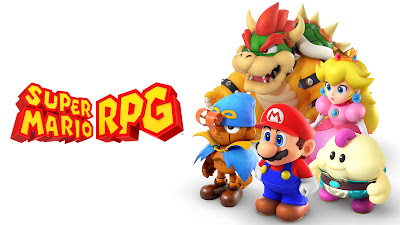
4. Super Mario RPG

Super Mario RPG was always a game I enjoyed, but it was never one of my favorite Mario RPGs... until now. Super Mario RPG even getting a remake to begin with was wild, but ArtePiazza went above and beyond with improving on the original while keeping everything people loved out it. In terms of the visuals, the Super Mario RPG remake is remarkably accurate. The characters look just as lovably scrimbly as they always did, the posing is damn near identical, and while the new translation did change some names and remove some pop-culture references, the vast majority of the game's best jokes were left completely intact. And it's a good thing too because playing Super Mario RPG again really made me appreciate just how incredibly funny and heartfelt this game is. I think I got more attached to this party than any party in any other Mario RPG, they're so lovable and fully-formed as characters thanks to Taro Kudo's excellent writing. The devs also went the extra mile and added in fully-rendered CG cutscenes for pivotal moments, and they are absolutely stunning. The remixed soundtrack by Yoko Shimomura is also perfect, with every song getting rich orchestrations that add in even more layers to an already great score.

In terms of gameplay, Super Mario RPG initially felt like the most simple out of the Mario RPGs, as its successors would go farther with the action commands and it was noticeably more basic than its Squaresoft contemporaries. This remake does just enough to liven up battles by putting a larger emphasis on action command timing, introducing an action command chain system that gives you perks for nailing action commands in a row, a super precise perfect command that deals splash damage, and an action gauge that lets you do unique special moves depending on your team. I think most of these changes are for the better, especially that super addictive chain system, but the game also compensates for the decrease in difficulty by introducing some brutally hard post-game rematches that test your skills in the game's mechanics in ways never before seen. There's also a whole bunch of nice quality of life improvements like the addition of a bestiary, the improved menuing, fast travel, records to beat for many of the minigames, and an auto-run option. Super Mario RPG perfectly toes the line between capturing the appeal of the original work and elevating it for a modern audience, it's pretty much a perfect remake in my eyes.

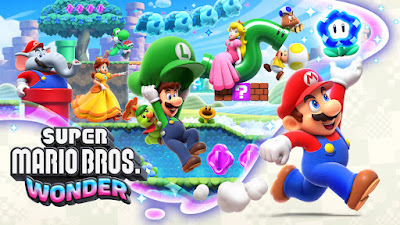
3. Super Mario Bros Wonder

This is probably the least surprising entry on this list if you are at all familiar with my taste in video games. I'm not even sure what I can say about Super Mario Bros Wonder that hasn't already been said at this point. It's an incredibly tight and well-designed platformer with top-notch movement, inventive level design, and a visually stunning 2D/3D artstyle that gives the characters so much extra personality. While most of the 2D Mario games outside of like World and Land 2 can feel somewhat derivative nowadays, Super Mario Bros Wonder is bursting at the seams with fresh new ideas and innovations. The core gimmick itself are these flowers that cause the level you're in to dramatically shift and terraform, the entire philosophy that Super Mario Bros Wonder is built upon is to surprise the player. And despite all of the experimental level design and wacky gimmicks, the series' penchant for incredible level design remains entirely intact. SMB Wonder never veers too far into gimmickry, it's always a blast from start to finish.

Super Mario Bros Wonder also leans far more into the collectathon aspects of the series, with a massive roster of collectibles, hidden secrets, and optional side levels to discover. There's a very neat badge system that you can use to boost your moveset, tons of charming standees that you can use in Wonder's surprisingly robust multiplayer, and a laundry list of varied bonus stages from bite-sized mini challenges to enemy gauntlets to rhythm games to the literal worst puzzles ever created. And to top it all off, Wonder boasts an incredibly polished and charming presentation that really emphasizes the cartoony aspects of Mario's cast to great effect. Characters like Daisy, Toadette, and Nabbit have never looked this good in motion. Wonder even takes cues from the Mario RPGs by giving each world a cute little mini narrative, some of which not even ending on a boss fight. And to top it all off, the soundtrack is fantastic, combining that classic Mario sound with a more modern feel. Also, there are singing Piranha Plants, and you'd have to be heartless not to like that.

2. Bayonetta Origins

I'll admit that I haven't gotten around to playing the mainline Bayonetta games yet. They look cool, and I quite like character action games, but I just never got the chance to play them. However, with Bayonetta Origins, I just couldn't resist. It looked so unique, and it was getting quite a lot of surprise praise by Bayonetta fans. After checking out the demo and really enjoying it, I went ahead and bought the full game, and folks, we got a real sleeper hit on our hands with this one. Bayonetta Origins shows Platinum Games stepping outside their hack-and-slash comfort zone a bit with a game that feels like it harkens back to their work on Okami as Clover Studio. It has that experimental PS2 game energy to it, boasting a stunningly original painterly visual style and an unconventional twin-stick control scheme that feels like it's ripped straight out of Ape Escape.

At its core, Bayonetta Origins is a low-key adventure game where you explore a labyrinthe forest as Cereza (young Bayonetta) and her new familiar Cheshire at the same time. You'll often find yourself having to control both characters in tandem, and pretty much all of their combined abilities are used both for the enjoyable puzzles and fun combat. The main campaign is filled with surreal environments, fun setpieces, and thrilling boss fights that let Platinum flex their action chops, but the world is also just chock-full of side content such as a ton of hidden collectibles to find, contained challenges to do, upgrades to get, and costumes to unlock. There's even a hidden postgame campaign just to sweeten the deal. And even beyond the gameplay, Origins's presentation is immaculate. I'm aware fans of the series are a bit burned by the third game's narrative, but I gotta say, the story in Origins is actually really good. It's a simple but effective coming of age tale with a strong character arc for Cereza and enjoyable banter between the main cast. The framing of the entire game as a picture book also imbues Origins with so much soul, from the charming narration to the stunning watercolor visuals to the gorgeous orchestral score. That final vocal track hit me on a level only something like Ico's credits theme could manage.

In a similar fashion to fellow sleeper hit Hi-Fi Rush, Bayonetta Origins shows a dev team taking a risk, going out of their comfort zone, and making something experimental and unique. Origins didn't sell especially well, of course, it's a niche game within an already niche series, but it's those weird, niche titles that are what really stick with me a lot of the time. It's the same reason why I love games like Gurumin, and Klonoa, and Parasite Eve. Bayonetta Origins looks and plays unlike any other game out there, and it's a top-notch adventure game to boot. I can't think of a better game to call my favorite new release of 2023. However...

1. Metroid Prime Remastered

I know it might seem kind of lame to place a remaster of a game from 2002 in the #1 spot, it probably sounds like I'm implying nothing from this year managed to reach those same heights. But in reality, I think this is a testament to how perfectly Metroid Prime has aged, that it is able to hold its own with games made 20 years down the line. To this day, Metroid Prime is still one of the most immersive games I've ever played. It does such an effective job at putting you in Samus's shoes, and allows you to see the world of the Metroid series through entirely new eyes. The sheer attention to detail put into the world of Tallon IV and its lore is still remarkable. And even more, Metroid Prime is just a damn good metroidvania that perfectly recreates the series' formula in 3D. Tallon IV is an incredibly engaging planet to explore, combat is as fun as movement-based as always, the bosses are towering and memorable, and the game is chock-full of iconic setpieces that will always stick in my mind. And the phenomenal and atmospheric score by Kenji Yamamoto is just icing on the cake, solidifying Metroid Prime as one of my favorite games ever made.

And of course, even beyond the game itself, the actual work that Retro Studios put into Metroid Prime Remastered is incredibly impressive and shows that the dev team hasn't missed a beat when it came to working on this series. Metroid Prime Remastered is, bar none, the most visually-stunning game on the Switch right now, and it still stuns me that it was even possible on this hardware. The texture work is immaculate and the textures themselves are far more detailed and grisp, the added particle effects and improved lighting do so much work to heighten the mood of every area, and it still manages to run at a smooth 60fps. I thought the original Metroid Prime already aged wonderfully visually, but this Remastered makes it look downright dated. On the gameplay front, Remastered also adds just enough worthwhile additions to really solidify itself as the definitive version. The sheer amount of customization options Retro Studios added is quite impressive, and being able to use gyro/right-stick aiming completely transforms the game for me. Add in some charming collectible concept art and models, and some extra difficulties, and you get what feels like a truly complete package. And to top it all off, Remastered was shadow-dropped in a Direct and released for an uncharacteristically low price of $40, and yet the remake was so quality that I still would've easily bought it for $60 and felt like it was worth the extra money. Metroid Prime Remastered is one of the best remastering jobs in all of video gaming, and it took what is already one of the greatest games of all time and improved it in ways I didn't think was imaginable.