Tuesday, March 5, 2024

Mega Man Music Reviews: Mega Man 9

 Mega Man 9... is still a game I'm incredibly mixed on. It's got some of the best level, weapon, and boss design in the entire franchise, but it's so hard to look past just how regressive it feels, how much it takes from MM2, and how much it feeds into the mindset that Mega Man should only be 8-bit and never make any mechanical improvements. It's born solely from the idolization of MM2, and the most frustrating part about it is that it's so much better! The soundtrack encapsulates this. It's trying so damn hard to be like Mega Man 2's soundtrack and I'd say it far surpasses it... but that also leads to it not really having much of an identity beyond sounding like Mega Man 2's soundtrack. That's not to say MM9's music is bad, hell no, it's incredible. Inti Creates has a stellar sound team and they did a fantastic job here, but it's just not a soundtrack I go back to listen to as much as I do with 5-8.

Mega Man 9

Opening
Mega Man 9 starts with a lengthy three-part opening that's... fine. I like the melancholic first third, but the rest of the track isn't super memorable.
3/5 Stars

Title Theme
Great title theme, easily one of the best in the series. It matches the MM2 title theme in terms of sheer energy and momentum, while also feeling instantly iconic in its own right.
4/5 Stars

Menu Theme
This is just the password theme from Mega Man 2.
2/5 Stars

Stage Select
This is a pretty groovy piece, and it's one of the longer stage select themes to boot. The main melody is catchy, and the arpeggios coming in at the second half is a pleasant surprise.
4/5 Stars

Concrete Jungle
Concrete Jungle sounds like a fuller version of the title theme, and it sounds really good. It definitely has that Mega Man sound to it with the banging background track, the catchy and energetic main melody, and the general sound of all the instruments.
5/5 Stars

Thunder Tornado
This is easily one of the most memorable Robot Master themes in Mega Man 9 because of how unique it sounds. The head-banging opening, the melodic verse, that iconic chorus, and those distinct whistle sounds. At the hands of a lesser composer, Thunder Tornado could've sounded way too shrill for its own good, but Ippo Yamada really pulled it off.
5/5 Stars

Splash Blue
Splash Woman's theme is probably my favorite of the Robot Master themes, it sounds so pretty and melancholic. The syncopation in the melody is super well-done, and that whistle sound is beautiful. A worthy successor to Bubble Man, in my opinion.
5/5 Stars

Plug Electric
This is probably the most MM2-sounding track, even bringing back that iconic buzzing sound in the background. The melody is just as energetic and bopping as always (even if I get it confused with Concrete Man's theme for some reason), and the triumphant climax at the end is fantastic.
5/5 Stars

Jewel Temptation
I adore Jewel Man's theme, it's up there with Tornado Man's theme in terms of how fresh-sounding it is. This is an incredibly groovy track with some sick guitar solos, and a very distinct clinking sound that really gives off the feel of a mineshaft.
5/5 Stars

Hornet Dance
Hornet Man's theme is sadly one of the less memorable tracks for me, but it's still a very pleasant and upbeat theme. Befitting the name, it has a very balletic feel to it, and the chorus is ridiculously catchy.
4/5 Stars

Magma Burning
Magma Man's theme is pretty handily the weakest of the Robot Master themes, even if it's still overall a really good track. The chorus is a fantastic cap to the entire piece, but the muted first half is a bit underwhelming with how much it sounds like any other NES Mega Man track.
4/5 Stars

Galaxy Fantasy
Okay, I have a bit of a hot take. I don't adore Galaxy Man's theme like everyone else seems to. That being said, though, it's a great track. The opening is absolutely iconic, the chorus is stellar, the whole track is super groovy, and it nails that off-beat minor tone that many associate with NES Mega Man. It's just not a top tier track for me. A Tier, maybe.
5/5 Stars

Boss
This is a pretty well-known boss theme, one might even call it iconic. It's certainly memorable and distinct, but as a boss theme, it's kinda underwhelming. It lacks the energy of the series' best boss tracks, instead feeling somewhat muted and sleepy.
3/5 Stars

Get A Weapon
It's the same weapon theme as in Mega Man 2.
2/5 Stars

Shop
Oh, I love this theme, it's absolutely adorable. It's so light and happy, and it captures Roll's personality perfectly.
5/5 Stars

Rush Jet
It's the MM2 weapon theme but a bit dreamier.
2/5 Stars

Suspense
This sure is a suspenseful piece of music. The pittering notes do a good job at putting you on the edge, as does the way it keeps slowly escalating. Solid cutscene track.
3/5 Stars

Flash In The Dark
If there's one thing Inti Creates absolutely nails, it's the Wily Castle themes. With Flash In The Dark, Ryo Kawakami (of ZX and ZX Advent fame) managed to outdo Wily Castle 1. This was the first Wily Castle theme since then that actually managed to make people stop and pay attention, and for good reason. It's so close to being the best Wily Castle theme (if only MM5 didn't exist), and even still it's one of my favorite tracks in the franchise. It perfectly balances the energetic rock and sheer drama that marks all the best Wily tracks, and that chorus is absolutely divine.
5/5 Stars

We're The Robots
We're The Robots isn't half bad either, though. The main motif is phenomenal, both heroic and melancholic, and the chorus at the end has such a strong sense of gravitas and finality to it. Another solid pick for one of the best Wily Castle themes out there.
5/5 Stars

Strange World
Strange World fits the name pretty well, it's got a great sense of chaos to it without feeling all over the place. It's actually a pretty groovy track, though none of it really tops that panic-inducing opening.
4/5 Stars

Castle Of Evil
Castle Of Evil is a pretty short loop meant to hype you up for the final boss, but it's still got a series groove to it, especially with those trills that occasionally pop up.
3/5 Stars

Wily Machine
This is definitely one of the better final boss themes, up there with 6 and 7. The militaristic sound it goes for fits with Wily perfectly, and helps lend the track a strong feeling of finality and urgency.
4/5 Stars

Ending
I don't really have much to say about this one. It's a decent loop but I feel like I've heard dozens of other NES tracks that sound almost exactly like it.
3/5 Stars

Staff Roll
Mega Man 9 has one of the best credits sequences in the entire series if not the best... but the actual staff roll theme isn't super memorable to me. It's very upbeat, but the melody doesn't really stick with me.
3/5 Stars

Overdrive Scramble
This is a pretty good bonus stage theme, but I don't have too much to say about it. The main melody is both catchy and has a nice sense of intrigue to it, but the track is also kinda just there.
4/5 Stars

Maze Of Death
Maze Of Death is an awesome track. It sounds like a techno rave, with a sprinkling of glitchcore to really keep you on toes. It can be very repetitive, but it's certainly one of the most unique tracks in the soundtrack.
4/5 Stars
 

Sunday, March 3, 2024

Mega Man Music Reviews: Mega Man & Bass

Mega Man & Bass's soundtrack is easily the jazziest in the series, with a heavy emphasis on the SNES's lovely slap bass. It's not my personal favorite, but that's not saying much, it's still a very good listen. Like with MM7, this was a collaboration between three composers, Akari Kaida, Naoshi Mizuta, and Toshihiko Horiyama once again. And out of these three, I think Kaida understood the assignment the most. Her tracks are all incredibly groovy bangers, while the other two's feel a bit more hit or miss. Kaida would also become a very important Mega Man composer as she'd become one of the two major Battle Network composers along with Yoshino Aoki.

Mega Man & Bass

 Title
What a groovy title screen, I love it! Mega Man & Bass immediately asserts itself musically with some smooth basslines and a melody that just keeps building.
4/5 Stars

Data Select
Even the file select music is incredibly groovy. The main melody is super upbeat and catchy, and the basslines are impeccable. Like with MM8's menu music, I feel like I hear this track everywhere nowadays, and well-deserved.
4/5 Stars

Player Select
This is a fine player select theme, though it's really short and repetitive. The twinkling keyboards sound very nice, but there's also one annoyingly long held note in the background that's very hard to unhear.
2/5 Stars

Opening Stage
Well, here we have the last of classic Mega Man's opening stage themes... and it's the best one. The main melody just sounds so adventurous and soaring, and the way the track keeps escalating over time is so good. The piano chords and bass keeps things groovy, and the synth solo is remarkable, starting unassuming until you notice that it's still going and is building towards a powerful climax.
5/5 Stars

Stage Select
I like what this theme is going for. It fits the computer aesthetic of the stage select very well and the pittering notes sound really satisfying, but it's aggressively short, way too short for its own good.
3/5 Stars

Dynamo Man
The next few Robot Master themes are all Kaida, and they're generally really great. Dynamo Man's theme has such a groovy riff, and the spy-movie-esque main melody is such a bop.
5/5 Stars

Cold Man
Cold Man's theme is one of the more unique ice themes. It has the melancholic melody you'd expect from a Mega Man ice theme, but the background theme is the same groovy bass that you'd find in the rest of the Mega Man & Bass soundtrack. It leads to this really unique and engrossing juxtaposition that helps Cold Man's theme stand out a lot.
5/5 Stars

 Ground Man
ABSOLUTE BANGER. I adore Ground Man's theme, it's hands down one of the smoothest pieces of video game music ever conceived. The keyboard chords in the background, that slick central melody, the way the bass ties together each unique part of the track, it all sound so effortlessly groovy.
5/5 Stars

Pirate Man
Like with Cold Man's theme, Pirate Man's theme has that same juxtaposition between a melancholic central and a groovy background track. However, I do slightly prefer Pirate Man's theme as I think it has a stronger and more noticeably dramatic melody and I love the chimes used for the instruments.
5/5 Stars

Burner Man
Horiyama's sole Robot Master theme is exactly as weird as you'd expect, with the same kinds of repeated notes that populate his music. It's not one of my favorite tracks in the game, but the pretty pan flute instrument and the head-banging chorus really tie everything together.
3/5 Stars

Magic Man
Okay, this does not feel like a Robot Master theme at all. I thought Clown Man's theme was unfitting, but this feels like a victory theme! That being said, it's a really solid and memorable victory theme, and it uses the same pan flutes as Burner Man's theme.
3/5 Stars

Tengu Man
Kaida's back and gives Tengu Man yet another incredible theme. The upbeat and laid-back melody is so uplifting and heart-warming, and like with all her other tracks, the tight bass and percussion carry the piece along at a good pace.

Astro Man
So... this track kinda blows, huh? Like, it's not hard to listen to or anything, but it's just such a nothing track. It's slow-paced, the melody is sparse and muted, and it's such a pale shell compared to Astro Man's incredible MM8 theme. I think it's fair to say that this is the worst Robot Master theme in the entire series, and it's not even close.
1/5 Stars

Boss Battle
Okay, we're back. This is a pretty good boss battle, and it just screams Horiyama. It has that blend of adrenaline-pumping pacing and an incredibly melancholy melody, and I love how uncharacteristically tragic it sounds for a boss theme.
4/5 Stars

Get A Weapon
This is easily one of the best weapon upgrade themes. It's pleasing to the ears, loops smoothly, and boasts a killer bassline. That being said, it's still a weapon upgrade theme so it's also pretty short.
3/5 Stars

Shop
What else can I say that I haven't already said? The shop theme is yet another solidly jazzy menu track with a groovy bassline and some smooth keyboard. Kaida's just showing off at this point.
3/5 Stars

Crystal Gate
This could've been a solid bit of ambience with some very pleasing instrumentation, but the way the time signature keeps shifting really hampers the track for me.
2/5 Stars

King Stage
Yet another very distinctly Horiyama track. King Stage's theme is so dramatic and tense, with frenetic percussion and an incredibly downbeat melody, but it still sounds so good. This could've easily fit right in as a Mega Man X4 track and no one would notice.
4/5 Stars

Wily Stage
The Wily Stage theme, on the other hand, is a lot more toned down. The repeated bass riff sounds really good, but the melody itself is pretty basic and repetitive. The chorus is solidly tense, but it's also incredibly short.
3/5 Stars

King/Wily Battle
I really like Toriyama as a composer but I'll be the first to admit that his work on the classic games was a lot more hit-or-miss. The soundtracks for X4, Tron Bonne, and Battle Network 4 (and Apollo Justice I guess) is where his style really shines, but some of his classic tracks can border onto too annoying... and this is one of them. The main melody is good, very tense and frenetic, but the overwhelming background instruments and that thrashing chorus really drag down the track.
2/5 Stars

Ending
Mega Man & Bass ends with a nice bit of blues. It's such a smooth track, from the lovely melody to the stellar percussion to that chord progression. A great cap on the jazziest game in the series, even if the second half peters off a bit.
4/5 Stars

Data Base
This is secretly my favorite track in the game, it's shockingly beautiful. The blend of the soft synths in the foreground and the woodwinds in the background just give off the most aggressively 90s VHS Tape vibes possible. Dare I say, it almost sounds kinda vaporwave, as if it wouldn't feel out of place in the Tetris CD-i soundtrack. Absolutely heavenly track.
5/5 Stars

Mega Man Music Reviews: Mega Man 8

In terms of its music, Mega Man 8 is very much the black sheep of the classic Mega Man games. Shusaku Uchiyama of Resident Evil went for a very synth-heavy sound that dabbled in genres like DnB, house, and generally abstract music. It's not at all like any of the previous games, but it's still genuinely one of the most incredible soundtracks in the entire franchise if you're open to something new.

Mega Man 8

Opening
What a banger opening! Mega Man 8 puts its best foot forward with an incredible DnB piece fit with wailing guitars, airy synths, and plucky pianos. It sounds equal parts futuristic and of its time,
5/5 Stars

Electric Communication
As for the Japan opening theme, it's pretty good. Electric Communication is certainly energetic, the chorus is super catchy and fun, and the whole track has a cool anime opening feel to it, but I still think I like the US's Opening theme a bit more.
4/5 Stars

Title Theme
Definitely a lot more laid-back than your average title theme, but MM8's title music makes up for that by being ungodly levels of catchy. The satisfying synths, the earwormy melody, that "whirrrrrrr" noise, it's all so pleasing to listen to. No wonder I hear it in so many Youtube videos.
5/5 Stars

Stage Select
Like the title theme, MM8's stage select is chill but really memorable and iconic in its own ways, from the squelchy background synths to the simple but catchy main melody.
4/5 Stars

Dr Light's Laboratory
What a turnaround after the previous game's shop theme. Dr Light's Lab is a bit on the sparse side, but it's an incredibly relaxing and almost lofi-sounding track that does a great job at putting you in a good mood.
3/5 Stars

Above Ground
We're two for two as far as classic Mega Man's opening stage themes go. Above Ground isn't as much of a banger as Ruined Street, but it's an incredibly catchy track that serves as the introduction of MM8's distinct trumpets. I also like how it carries over the synths from the stage select.
5/5 Stars

Underground
Huh... this theme kinda sounds a lot like the Super Mario Bros underground theme. Anyway, it's fine. The thick synth lead sounds pretty neat, but the track itself is pretty short and simple.
3/5 Stars

Frost Man
Easily one of the most iconic tracks and for good reason. That bass! That synth!! Those trumpets!!! Every instrument feels deliberately chosen to make Frost Man's theme feel as cold and icey as possible, while also having a ridiculously catchy and memorable melody. It's pretty crazy how much of Mega Man 8's music just sticks with you.
5/5 Stars

Clown Man
Clown Man's theme is easily the most unfitting Mega Man track of all time. It's so comically upbeat and cutesy, but it's also genuinely pretty good too. The melody itself is quite fun, and the chimes used as the instruments remind me a lot of Puyo Puyo music.
3/5 Stars

Tengu Man - PS1
Tengu Man is an oddball due to having two themes, one for each version of the game. Personally, I prefer the PS1 version. It has so much unbridled energy, and the melody is so instantly iconic and memorable. I especially love the frenetic sitar playing that caps off the track.
5/5 Stars

Tengu Man - Saturn
So apparently a lot of people really like the Saturn version of Tengu Man's theme and vastly prefer it to the PS1 version. I strongly disagree, but that doesn't mean it still isn't a great track. Tengu Man's Saturn theme is certainly a lot more intense and rocking than most of the other MM8 tracks, and some of the instrumentation like that absolutely nuts bass and the chilling chimes in the chorus are great. That being said, the PS1 theme is just more memorable and cohesive to me.
4/5 Stars

Grenade Man
Grenade Man's theme is yet another strong track, though it starts out pretty unassuming, mostly being carried by a noticeably groovy bassline to carry it. However, once that echoey synth shows up halfway through, the track gets so good, especially in that powerful chorus at the end.
5/5 Stars

Theme Of Duo
Duo's theme is very short and simple, but it manages to do so much with so little. The heavy usage of trumpet makes it sound so triumphant and heroic, but the tense background track gives the tune the menacing edge it also needed.
4/5 Stars

Cut Man
This is a cute version of Cut Man's theme. It's not quite as intense as the original version, but the echoing synths and tight percussion still makes for a really fun and solid remix.
4/5 Stars

Wood Man
Wood Man's remix, on the other hand, is pretty great. I love how tense and melancholic it sounds, taking the same catchy melody of the original but throwing in a more frenetic and strained background track to create this unique mix of emotions.
5/5 Stars

Sword Man
Now this is a weird theme. It goes for a really mysterious sound, with the first half sounding somewhat spooky and quirky, and its second half being really ethereal. I'm still a bit mixed on the track overall, but that second half is really good.
4/5 Stars

Aqua Man
Aqua Man's theme is pure lofi, and it's phenomenal. It's so chill and relaxing, and just keeps getting better, from the pleasant echoing piano in the pre-chorus to the really nostalgic and melancholic sounding chorus.
5/5 Stars

Astro Man
This is one of my favorite Mega Man tracks of all time, it's such a banger. The ticking clocks in the background, the quirky but incredibly catchy piano melody, and that chord progression. This track is Sonic CD as heck and I love that about it.
5/5 Stars

Search Man
If there's one word I would use to describe this track, it's effortless. Everything about Search Man's theme sounds so smooth, every part weaves together so elegantly. I don't even know what kind of synth is being used for the main melody, but it's so satisfying to listen to. It's a fantastic piece of house.
5/5 Stars

Mini-Boss Battle
This theme's alright, but it works better in context. The miniboss theme is tense and frantic, and does a good job at that. You can definitely see Uchiyama's Resident Evil show here, but it can be a bit too much to listen to on its own.
3/5 Stars

 Boss Battle
Mega Man 8's boss battle theme is very silly and sploinky, but like the rest of the soundtrack, it's also incredibly catchy and memorable. It has the same frantic energy of the mini-boss theme while being a lot more pleasant to the ears.
4/5 Stars

Boss Appearance
Surprisingly really good! It's got those same smooth chords that Astro Man's theme has, which leads to a really groovy track despite being such a short loop.
4/5 Stars

Get Weapon
Now this is a good weapon upgrade theme. Incredibly badass and intense, complete with a shredding electric guitar and some orchestra hits to make you feel really cool.
3/5 Stars

Wily Stage 1
Say what you will about the stage... its theme is incredible. It's so intense and menacing, and the synth lead Uchiyama picked is so perfect. It's so heavy, buzzing and stuttering out the melody, all the while a more haunting and airy background plays that slowly grows more prevalent.
5/5 Stars

Wily Stage 2
This is a pretty great Wily Castle theme. It's a lot more upbeat than the previous track, but it has a nice hint of melancholy to it. I especially love the flute and synth solos in the second half, they do such a great job at keeping the momentum going.
5/5 Stars

Wily Stage 3
Not one of the more memorable Wily Castle themes, but it's still pretty alright. The bass goes off, and I like the menacing melody in the second half, but I don't find it all that remarkable.
3/5 Stars

Wily Stage 4
Boss Appearance but longer and more energetic, which makes it better.
4/5 Stars

Bass Battle
Look, I love the bass-heavy original version of Bass's theme, but I think the Mega Man 8 version wins out here. It's way more chaotic and tense thanks to that frenetic background track, and the MM8's distinctly airy instruments fit the main melody so well.
5/5 Stars

Wily Battle
The first Wily Battle theme is fine. I like the whirring and beeping noises that show up every once in a while, but the track is kinda lacking in a central melody, it's kinda just all over the place.
3/5 Stars

Final Wily Battle
The other Wily Battle theme is similarly chaotic, but it's a bit more memorable. The crashing drum loop is very distinct and lends the track a lot of intensity, and the way it spirals out of control in the chorus does a good job at unnerving you. Shame the track is so short.
3/5 Stars

Staff Roll
And thus, Mega Man 8 ends just as it began, with an incredible DnB track. The juxtaposition between the laid-back piano and wild drums is so satisfying, and the laid-back melody is super pleasing to listen to. What a great end to a great soundtrack.
5/5 Stars

Brand-New Way
Oh yeah, and there's the JP ending theme too. The energetic tropical-sounding background track really makes Brand-New Way, it's just so fun and upbeat. Once again, it can't really top the DnB, but it's definitely a great ending theme on its own merits.
4/5 Stars

2024 Games I Played: Ufouria The Saga 2

Sunsoft is often considered to have been one of the most underrated developers of the late 80s and early 90s, known for secretly releasing some incredible hardware pushers for the NES in particular like Blaster Master, Batman, and Mr Gimmick. And that's not even getting into their visually-stunning and lovably quirky fighting games like Waku Waku 7 and Astra Superstars, the former of which ranks among my favorites in the genre. While they sadly faded into obscurity once 3D gaming hit it big, Sunsoft has recently been making a pretty big comeback, particularly through reviving their game catalog. Mr Gimmick got a rerelease, Trip World got a color version, but most fascinatingly of all, Ufouria: The Saga (also known as Hebereke in Japan) is getting a full-on sequel.

I was admittedly a bit unsure about getting Ufouria: The Saga 2. While I was always glad to see it exists especially since the original is definitely up there as one of my favorite NES games, it was still $25 for a legacy sequel to an NES game and the poorly translated blurb didn't give me the most confidence that it'd be worth the price. In particular, the statement that "Familar characters and stages of the original game are back" had me thinking it was gonna be a straight-up port. However, when the game came out on the 28th, the reviews were shockingly positive, managing an 80 on Metacritic. Will Sunsoft's first big game in decades turn out to be a pleasant surprise?

Well, let me start my review by getting one thing straight. Ufouria 2 is a full-on sequel with entirely original level layouts, progression, and story. It's a genuine attempt to expand on and modernize the formula of the original game, and I think it does a pretty solid job at that. The main premise is that an alien has arrived and is spreading goop around the planet, so the usual Hebereke quartet has to team up to stop him. The story itself is pretty basic, mostly consisting of the cast running around the world chasing down the aforementioned alien, but Ufouria 2 makes up for that simplicity with pure charm. This is a surprisingly funny game with tons of cute banter between the characters, both through the game's large amount of cutscenes and voice lines that pop up while you play. The comedy feels very Japanese, with some of the skits feeling straight out of a manzai routine, but the game still managed to get plenty of smiles out of me. That being said, while Ufouria 2's cutscenes are very endearing, there can be a bit too many of them. There are a lot of points where the game just stops you to watch an unskippable skit, which can really mess with the pacing at times.

The core gameplay of Ufouria is mostly like the original. It's a pretty basic platformer where you can swap between four characters each with their own unique traits. Hebe can climb, O-Chan can float and doesn't slip on ice, Jennifer can dive, and Sukezaemon can float in the air, and each character also has special unlockable spells that are all fun to use and helpful for getting even more of the colectibles. In the original, you can bounce on enemies to turn them into Popoons that you can use as projectiles, but in Ufouria 2, you can now create Popoons yourself which you'll need to clean up the aforementioned goop. It's a solid evolution of the combat in the original game and tossing Popoons is put to pretty decent use around the game. I actually think a lot of gameplay elements from the original Ufouria feel a bit more refined here. The moment-to-moment control feels a lot tighter and more fluid, you can swap between characters at any time without needing to open up a pause menu, and unlike in OG Ufouria, all four characters have standardized movement speeds so it doesn't feel like you need to spend 90% of the game as Hebe. Overall, it's a solid, polished moveset, no complaints here.

As for the actual gameplay loop, here's where things get a bit more interesting. The original Ufouria is a sort of metroidvania with a big open world to explore. Ufouria 2, on the other hand, is laid out a bit more like Mega Man ZX Advent. It's still interconnected, but the map is laid out like a hub and spokes system. You can enter most of the levels from the hub, and can fly back once you reach the end of an area. If anything, Ufouria 2 actually functions more like a roguelite. Yeah, seriously. Each level is generated from random pre-designed chunks every time you visit it, and you have a limited amount of lives to beat the stage or else you're sent back to the hub. You also have a pretty robust upgrade shop in the hub that you'll need to get coins and Utsu-Cans (the main collectible) to buy stuff with, so the main gameplay loop involves going on expeditions into each area, searching for treasures, and buying upgrades to allow you to access more areas and find more collectibles. This may sound really repetitive at first, but honestly, I found this loop surprisingly addicting. The random layouts for each stage keeps repeat visits fresh, and there's a ton of varied upgrades that are almost all worth going after, and I found myself unable to put the game away, always wanting to go for one more run.

Being a sequel to an NES game, the actual level design in Ufouria 2 isn't too complicated. The biomes are mostly pretty basic, and the game never gets all that challenging even with the unlockable hard mode turned on, but each level segment still feels deliberate and smartly-designed. The Utsu-Cans can be hidden in some pretty tricky spots too, which really made me rack my brain and take all my abilities into consideration. That being said, the Utsu-Cans is where my first big problem with the game spawns, and it's the 100% completion. There's 95 of these cans to find throughout the game, but due to the random generation, only three tend to show up in a run of a level max. Considering that most areas have around 10 cans, this means that you'll be having to replay the same areas dozens of times to get everything. Thankfully, the levels themselves are fairly short, but the long unskippable animation of you flying home every time you finish an area only serves to drag out the process even more. That being said, Ufouria 2 is short and fun enough that I did still enjoy fully completing it overall, but it's not for everyone. My other major gripe is just that the bosses kinda suck. They're these very basic and repetitive three-hit fights that feel ripped right out of the NES era, and they're usually lacking in any enjoyment or challenge.

In terms of its presentation, Ufouria 2 absolutely shines. Taking some pretty blatant inspiration from Good Feel's yarn series, Ufouria 2's artstyle is entirely made up of arts & crafts. I've always loved this kind of art direction in games, from Yoshi's Crafted World to LittleBigPlanet to Paper Mario to Tearaway, and it looks just as tactile and visually-impressive in Ufouria. But it's not just a pretty artstyle, Ufouria 2 has so much extra charm and attention to detail in its animations. Each of the four characters have their own unique set of animations ala Goemon 64 that all convey their unique personalities, there's a nice blend between stiffer recreations of the NES sprites and more fluid modern animations, and there's several unique level complete animations that shuffle at random. You can tell the developers love the Hebereke series through all the details they added, from the sketchbook with adorable drawings made in the artstyle of the original Hebereke, to brief cameos from the US versions of Hebe and O-Chan, to a great soundtrack primarily composed of fantastic remixes of the original game's tracks. It's all just so lovingly-crafted.

Overall, I had a great time with Ufouria 2. It's certainly a flawed experience with its exhausting 100% gauntlet, unskippable cutscenes, and lame boss fights, but the sheer fun and charm of the whole experience more than made up for that with a deceptively addictive gameplay loop, solid level design and mechanics, charming dialogue, adorable presentation, and lots of side content. I'm not 100% sure if it or the original is better, I prefer how 2 controls and like the added collectibles and character writing, but I also really like 1's open world format and soundfont. But regardless, Ufouria 2 does a great job of taking the Hebereke series in a new direction while maintaining all the charm of the original games, and it serves a heart-warming confirmation that, yeah, Sunsoft is back.

4/5 Stars

Saturday, March 2, 2024

Mega Man Music Reviews: Mega Man 7

Mega Man 7 is the first classic Mega Man soundtrack to not use chiptune, and I think that caused it to be very overlooked. It's a lot more light-hearted and less rock-heavy, but if you can look past all that, this is easily one of the best Mega Man soundtracks. It's got so many absolutely incredible tracks, along with all that classic SNES soundfont charm, with some killer slap bass lines, quirky instrumentation, and a wider range of genres and styles. It's also pretty unique for a Mega Man soundtrack as it's a collaboration between a bunch of Capcom's composers rather than just a solo project, though that unfortunately means it's not always apparent who did what. The composer list includes Yuko Takehara of MM6 fame, Makoto Tomozawa, and Toshihiko Horiyama. Horiyama in particular is a very important Mega Man composer due to the sheer amount of soundtracks he's worked on, and his distinctly weird and melancholic style is established right from the get-go in MM7.

Just for fun, I also want to try to guess who did what track. I'll mark out if each prediction is based off of a confirmation or my own prediction.

Mega Man 7

6 Months Later
Composer: Yuko Takehara (predicted)
Mega Man 7 pulls a Mega Man 2 and remixes the ending theme of the previous game for its opening. This is much slower and more pleasant version of the MM6 staff roll, but it still sounds quite great. I'm predicting Takehara for this one since it was her theme initially.
4/5 Stars

Searching For The Master
Composer: Makoto Tomozawa (predicted)
The second half of the opening theme is mostly just menacing ambience. I'm predicting Tomozawa since it kinda sounds like Wily Stage 2 which we know he composed.
1/5 Stars

A Fated Confrontation
Composer: Makoto Tomozawa (predicted)
Fantastic title theme! It's so energetic and driving, and the melody is super catchy, it's just a shame it's so short. Definitely a Tomozawa track
4/5 Stars

Ruined Street
Composer: Makoto Tomozawa (confirmed)
For a few games, classic Mega Man had opening stages and they were great. Ruined Street makes a fantastic first impression, with a badass synth melody and some rocking bass-lines leading to an incredibly propulsive and fast-paced track. This track is confirmed to be by Tomozawa who also did MMX themes like Spark Mandrill and Storm Eagle, so I think it's fair to say that all the blisteringly fast tracks are by him.
5/5 Stars

Friend Or Foe
Composer: Makoto Tomozawa (confirmed)
Bass's theme is pretty great too. It's a bit sparse, but the repeated bass line and the tense main melody still make for a really memorable and intimidating track. That being said, this isn't my favorite version of Friend Or Foe, that'll be for a later game...
4/5 Stars

Password Screen
Composer: Toshihiko Horiyama (confirmed)
Hey, a rare good password screen theme. Though, that shouldn't come as much of a surprise considering it's by the guy who built his career on the Mega Man X password theme. The twinkling keys in the backgrounds and uplifting melody never fail to put me in a good mood.
3/5 Stars

Stage Select
Composer: Makoto Tomozawa (predicted)
Definitely one of the best stage select themes in my opinion, maybe even the best. It's got that fun and groovy energy that marks all the best Mega Man 7 tracks, with a catchy and adventurous melody that does a great job at getting the player pumped. It has that driving groove that Ruined Street had, so I'm going with Tomozawa for this one.
4/5 Stars

Iceberg Area
Composer: Toshihiko Horiyama (confirmed)
Easily one of the most iconic tracks in the game thanks to its distinct and memorable melody, Iceberg Area is yet another stellar ice stage themes that puts some uniquely icey synths to very good use, especially in its ethereal chorus. Horiyama at his absolute best.
5/5 Stars

Forgotten Factory
Composer: Makoto Tomozawa (predicted)
Forgotten Factory is probably the definitive Mega Man 7 song, with the game's distinct synth and bass in full display. The 80s-sounding melody, wild percussion, and groovy basslines make for an incredibly fun and well-rounded piece. It's got all the hallmarks of a Tomozawa track.
5/5 Stars

Medical Science Lab
Composer: Makoto Tomozawa (predicted)
Medical Science Lab feels like Forgotten Factory: Part 2 for a number of reasons I'll get into later, but for now, just know that it has the same instrumentation, pacing, and sheer unrepentant grooviness to it that I loved about the previous track. I actually think I like Medical Science Lab just a bit more for that bassline and fantastic chorus.
5/5 Stars

Weather Research
Composer: Toshihiko Horiyama (confirmed)
Another Horiyama track. It's got that same airy vibe that Wind Man's theme, but with a touch more melancholy in its main melody. I particularly like the echoing notes in the chorus, it just sounds so light and pleasing to the ears.
4/5 Stars

Dr Light's Lab
Composer: Toshihiko Horiyama (confirmed)
While a bit too high-pitched for its own good, Dr Light's Lab still has the same uplifting vibe and earwormy melody that the password theme had.
3/5 Stars

The Robot Museum
Composer: Tatsuya Nishimura (confirmed)
The Robot Museum is a pretty neat remix of several classic Mega Man tracks, particularly Guts Man, Heat Man, and Snake Man. The Guts Man and Snake Man parts sound fantastic, but for some reason, Heat Man's part is absolutely ear-piercing which drags down what could've been one of the best tracks in the game.
4/5 Stars

Auto's Shop
Composer: Toshihiko Horiyama (confirmed)
Uggggggggghhhhhhhhhhhh...
Look, Horiyama, I love you, but this was a rare miss and a big one. With a short loop, an ear-piercing volume, and an abrupt loop, Auto's Shop is one of the most irritating pieces of music in the franchise. Not as bad as MM4's password theme, but very close. At least in Mega Man 4's case, I already wasn't a huge fan of the soundtrack. This track is a blight on what's otherwise one of the best soundtracks in the series.
0/5 Stars

Boyoyon Paradise
Composer: Toshihiko Horiyama (confirmed)
Ah, that's better. Spring Man's theme is still the weakest of the Robot Master themes, but it's still a fun and bouncy tune with a wacky melody that sounds like it's ricocheting off the walls.
3/5 Stars

Jurassic Jungle
Composer: Yuko Takehara (confirmed)
This is the one confirmed track by Yuko Takehara and wouldn't you know it, it's the best track in the game. Jurassic Jungle has everything that made MM6's music great and then some, it's got that same cadence and powerful feel to it. The melody is ridiculously catchy and intricate, and the chorus just makes you want to clap to it.
5/5 Stars

Horror Fortress
Composer: Makoto Tomozawa (predicted)
Aaaaaannnnnd this is probably the second best track in the game. The central riff is so charmingly spooky, and it's got the fast and groovy pace of Tomozawa's other tracks to boot.
5/5 Stars

 Giant Trailers
Composer: Toshihiko Horiyama (confirmed)
Not one of the more remarkable Robot Master themes, but still a solid and fun track with a wonderfully frenetic melody. I particularly like the chorus and how it just keeps building in volume and intensity.
4/5 Stars

Ghouls N Ghosts
Composer: Ayako Mori (original composer), Makoto Tomozawa (possibly did the arrangement?)
While I still slightly prefer Horror Fortress, the fact that you can play the Ghouls N Ghosts theme as an easter egg is still wonderfully, and this is easily one of my favorite versions of the track. The MM7 bass helps to lend it such a groovy feel.
5/5 Stars

Boss Battle
Composer: Makoto Tomozawa (confirmed)
Gotta say, I'm surprised Tomozawa was confirmed to have worked on this one! This almost felt like a Horiyama track. Either way, this is a fantastic boss theme, easily one of my favorites. It's got such a chaotic and frantic feel to it, using high pitched notes to great effect without it coming off as annoying or ear-piercing.
5/5 Stars

Got Weapon
Composer: Makoto Tomozawa (confirmed)
Eh, this one's pretty weak. The bass sounds good, but the keys in the background sound a bit off-beat to me.
2/5 Stars

Bass' Betrayal
Composer: Makoto Tomozawa (confirmed)
A pretty basic track. It gets across the tragedy of... well... Bass's Betrayal... quite well but it's not worth listening to beyond that.
2/5 Stars

Entrance
Composer: Makoto Tomozawa (confirmed)
Entrance, on the other hand, manages to do both. This is a phenomenal piece of music, and easily ranks among the best Wily Castle themes (yes, it's better than MM2's). From the ominous intro, to the wailing guitars, to the tense basslines, to that phenomenal percussive drop midway through, Entrance perfectly captures the vibe that Mega Man has had enough with Wily, while also being a super groovy track on its own.
5/5 Stars

Turtle's Realm
Composer: Makoto Tomozawa (confirmed)
This is probably the weakest Wily Castle theme, though that's not saying much considering how good they all are. The bass and percussion are as fantastic as always, but the melody itself is a bit muted.
4/5 Stars

Walk The Invisible
Composer: Makoto Tomozawa (predicted)
This is it, the musical climax of the entire game. Walk The Invisible is a fusion of Forgotten Factory and Medical Science Lab, and it's phenomenal. It's such a triumphant, energetic, and climactic track that has everything that makes MM7's soundtrack so special in abundance. Groovy bass, catchy synth, uplifting melodies, tight percussion, it's all there.
5/5 Stars

The Hatches
Composer: Makoto Tomozawa (predicted)
In terms of its tempo and percussion, The Hatches is pretty much a direct continuation of Walk The Invisible, though it's a lot shorter. The melody is still super catchy, though, and the looping is incredibly clever.
4/5 Stars

Wily Machine No 7
Composer: Makoto Tomozawa (confirmed)
The Wily Castle boss theme in Mega Man 7 is really good... but I'm gonna be honest here, I'm kinda at a loss as to why it's good. This is a very quirky track that with a blistering melody that feels faster than the backing track, but the track still comes together really well without feeling out of sync. I don't know what to tell you, it just sounds really good.
4/5 Stars

Final Wily Battle
Composer: Makoto Tomozawa (predicted)
This track has the guitars so I'm guessing it's Tomozawa again. As much as I loath this boss fight, this is easily one of the best final boss themes in the series. It's tense, frenetic, and really puts you in a state of panic (fitting given the boss fight).
4/5 Stars

A Hero Returns
Composer: Makoto Tomozawa (confirmed)
Mega Man 7 easily has the best end credits theme in the series. It's so unbelievably badass, with an incredibly smooth melody and bass line. Every part of the track flows so seamlessly into the next, culminating in the chorus ending off with one of the coolest chord progressions ever. And the fact that this track plays while Mega Man is walking away unflinchingly from a burning Wily Fortress is just so perfect, this theme knows Mega Man is cool.

Why I Love Paper Mario: The Origami King

 Oh boy, time to talk about Paper Mario again. I've said my piece about the series in the PM64 post, I know I have weird favorites, but ultimately Super and The Origami King are simply the Paper Mario games that resonated with me the most. I put TTYD through its paces when talking about Paper Mario 64 because there's a direct comparison there, but I'll try not to bring it up when talking about Origami King. TOK is, after all, a pretty unique game, so I want to focus solely on what the game itself does special. So no comparisons this time, let's talk about why Origami King lands so well for me personally.

MASSIVE SPOILER WARNING

But first, I want to talk about what I want from a Mario RPG. At their most fundamental level, I like Mario RPGs because they're able to shine a unique light on the Mario universe that none of the mainline games are able to. The platformers are fantastic on a gameplay level, but with a few exceptions (Sunshine, Galaxy), I always found the limited story and lack of character as a bit of a drawback. I want to be emotionally invested in the Mario cast like I would in a more story-focused platforming series like Klonoa or Sonic or something, but that's not what Nintendo is going for with Mario. The RPGs, on the other hand, are able to flesh out the Mario cast and the various species of the Mushroom Kingdom, all the while offering a nice balance of whimsical comedy and heartfelt emotional beats. I don't inherently think completely original character designs are necessary for this to happen, though. Primarily, I want Mario RPGs to have thoughtful and earnest writing that sucks me into its world and endears me to its characters.

On the gameplay front, I like how Mario RPGs are able to create a unique balance between the RPG and platformer genres, with inventive battle systems built around Mario's unique moveset (as in action commands, stylish moves, Bros Attacks, etc) and a heavy focus on overworld design that encourages platforming and exploration. Ideally, I want the best of both worlds in this aspect, though that's admittely pretty hard to find with the Paper Mario games. And finally, I'm expecting an absolutely banger soundtrack. There's not a single Mario RPG game that I'd say is weak musically, between the consistently fantastic Shimomura scores and lovably eclectic Paper Mario soundtracks, so the composers better be giving it their A-game. A heartfelt character-driven narrative, a unique RPG/platforming fusion with compelling exploration, and an impressive and impactful soundtrack. The Origami King fulfills all three of these major criteria for me, and then some.

Let's start with the story. I think that TOK has hands down the best character writing in the entire Mario franchise. There is so much heart put into how this game's characters are written, and The Origami King takes great pains to wring just enough extra depth out of both its veteran and original characters to make them really likable and engaging. It helps that you don't accumulate a massive party this time, each partner gets an entire chapter to be fleshed out before you move onto the next one. The Bowser family is probably the highlight in this aspect, they have so many amazing character moments. Kamek's role as babysitter gets a big focus, Bowser Jr sacrifices himself to save Mario, Bowser doesn't even hesitate to join Mario's side at the start of the game, it's so good. Olivia is also an absolute joy to be around. She has such a dynamic and colorful personality, and we learn a lot about her through her various ramblings over the course of the game. I'm not exactly sure if she's my favorite of the main Paper Mario characters, I think Huey is slightly better-realized, but she's still fantastic. And of course, there's Bobby who easily ranks alongside Vivian as my favorite Paper Mario partner from a story level. He's remarkably endearing, his arc about figuring out his origins is engaging, his dynamic with Mario and Olivia is adorable, and his tragic sacrifice at the end of his chapter is such a effective gut punch. Even Mario takes a bit to mourn, which is some of the most characterization he's even gotten. Just to really hammer home this game's commitment to characterization, there's a bunch of points where you come across a bench that you can use to just... sit and chat with Olivia and whoever's in your party. On the final bench, Bowser straight-up has a heart-to-heart with you about being a father. TOK shows that the team at IntSys and head writer Taro Kudo truly cares about the Mario cast, and they do a hell of a job at making me care for them too.

Beyond just the character writing, The Origami King also just has a really strong balance between comedy and drama. Color Splash was hilarious, but The Origami King is both hilarious and dark. There's so many cute and charming little details, like how you can break the speaker at a BBQ which kills the background music, or Olivia gushing over Birdo, or the random musical numbers that just pop up occasionally. On the other side of the spectrum, this game has permanent deaths that are treated with the utmost respect. Bobby and Olivia both sacrifice themselves at certain points and don't come back, which is more than I could say about TEC or Luvbi. There's also a surprising amount of body horror ranging from Peach's body being used as a tapestry to a bunch of toads having their faces hole-punched out to a buzzy beetle made of Bowser's ripped army to a cutscene where Mario gets sliced in half to a stapler boss that gets its "jaw" snapped. The Origami King feels particularly creative with how it uses its paper setting in this aspect, and you get the impression the team had a lot of fun pushing the limits with what they can get away with when the characters are made of stationary. So yeah, as far as story goes, I love what The Origami King tried to do. Sure, there aren't as many unique character designs as in other Mario RPGs, but that's not what makes for an engaging story. The writing is what makes for an engaging story, and I stand by TOK being one of the best-written pieces of Mario media ever.

Now let's talk about the gameplay. The Origami King is at its core more of an action-adventure game than an RPG. There is a much stronger focus on exploring its large open world, than there is on fighting enemies, and it shows in how much the developers seem to love letting you skip fights completely. As far as that exploration goes, TOK freaking nails it, it's easily the best in any Paper Mario game. The settings in this game are absolutely massive and a joy to explore, full of secrets and collectibles to find like crumpled toads and confetti holes to fill up. There's a ton of fun and memorable setpieces and settings, so many to even really get into. You play a soccer game with giant paper mache Shy Guys, explore a variety of Zelda-like dungeons to fight elemental monsters, wander around a shogun-themed amusement park doing various attractions and events, visit a serene spa in the middle of the jungle, wage an all-out battle inside Bowser's Castle, and my personal favorite, explore a massive ocean filled with entirely optional islands that feels ripped straight out of Wind Waker. As a matter of fact, TOK as a whole feels a lot like some of the best Zelda games in terms of its progression, it was frankly a breath of fresh air coming right between Breath Of The Wild and Tears Of The Kingdom. 

As for the battle system, this is where things admittedly get a bit iffier. Now I'm not going to lie to you and say that the ring system in this game stacks up to the actual RPG combat of other entries in the series, of course it doesn't. However... I still don't mind it, actually? Look, if I'm not into an RPG battle system, I'll let you know. I can rant about the limited attacks in Sticker Star and Color Splash all day, but I genuinely had a good time with the ring system. I'm a puzzle fan after all, and successfully lining up the enemies was something I actually found quite satisfying. If anything, I wish the puzzles were tougher, Origami King is kind of a piece of cake overall. Thankfully, the boss fights pick up the slack in this aspect, as they can be genuinely head-scratching and tough at points. The decision to flip the system on its head by having the boss in the middle of the ring, and the player trying to chart a path to it is really creative and led to some really enjoyable encounters. The accessories system was also a pleasant surprise, they're essentially a lite version of the badges from previous games, but they get super expensive which really encouraged me to go into battles and accumulate the money I needed to buy them. If you don't like the ring system, that's totally fine, it's not something I want to see in every Paper Mario game of course. However, in a genre where I frequently tend to fall off games entirely either out of boredom or hitting a wall with a specific battle, I think it says a lot about TOK's gameplay that it managed to keep me engaged for its roughly 30 hour runtime.

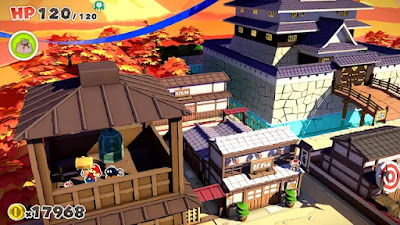
In terms of its presentation, Paper Mario: The Origami King looks absolutely stellar. I don't care what anyone says, Paper Mario games should look like actual paper dioramas. It's such a lovely and charming artstyle with so much versatility and potential, and seeing how the developers try to realize everyday objects with the limited materials is always a joy. To this day, I think TOK is one of the best-looking games on the Switch, it's lush, colorful, detailed, and just plain visually-interesting. Another thing I'll defend is how the characters are paper cutouts, I vastly prefer them to the puppet tweening that the earlier games had solely for the range of expressions all the characters have (note: this came out before the TTYD remake announcement, obviously things have changed slightly). As I mentioned earlier, I think TOK does such a good job at playing around with the limitations of the paper characters, and it just leads to so many charming details and visual quirks that left me with a big grin on my face for the whole game.

 And then there's the soundtrack... holy crap. I said I wanted a banger soundtrack, but The Origami King has one of Nintendo's greatest OSTs of all time. It's an eight-hour 200+ track behemoth with so many incredible tracks, from lovely area themes (Picnic Road, Autumn Mountain, Exploring The Great Sea), to catchy town themes (Snif City, Exploring Shogun Studios, Toad Town), to so many impeccable one-off tracks that have no business being as good as they are (Pool Party, MAX Power, Swan Lake - Punk Remix, Tranquil Pipes Treehouse), to an absolutely godly final dungeon theme with Yoko Shimomura doing the vocals. And that's not even getting into the battle music! Just to emphasize how much effort the music team put into this soundtrack, there's a unique version of the battle theme for every area. And the boss themes are all these heavy metal bangers, very similar to Sonic Frontiers in how they just slap you out of nowhere. The highlights for me are Disco Devil, The Shifty Sticker, Boss Fight, and The Dual-Blade Duelist, but they're all incredible. The Origami King's soundtrack is the definition of "didn't need to go this hard", and the fact that it wasn't even nominated for best music at the 2020 Game Awards still has me furious to this day.

I really don't know what else to say, Paper Mario: The Origami King is a game that just really resonates with me on every level. It taps into what I want from a Mario RPG, but in a more unconventional way. The story is this utterly wild blend of incredibly solid character writing, quirky humor, and gleefully unhinged body horror that was a joy to follow throughout. The gameplay is a really fun adventure game with incredibly engaging exploration, tons of charming and memorable setpieces, and a very unique battle system that, while flawed, I still found quite satisfying. And the presentation is absolutely gorgeous, with one of the best soundtracks in all of gaming. The Origami King has so much heart and charm put into every single crease, it's a game that I will always unabashedly love, no matter what.

Friday, March 1, 2024

2024 Games I Played: Cavern Of Dreams

In 2023, we got three indie games inspired by the N64 era 3D platformers that released exclusively on PC: Pseudoregalia, Corn Kidz 64, and Cavern Of Dreams. As you'd expect, I wasn't able to play any of them last year, which is why I was very pleasantly surprised to learn that Cavern Of Dreams was getting a Switch port on Feb 29th. Now that I've finally gotten my hands on it, I'm pleased to say that it's a very great time.

Cavern Of Dreams has a classic collectathon premise where you play as a dragon named Fynn as he explores the titular cavern to find all of his lost siblings (most of whom haven't hatched yet). You may think this sounds a lot like Spyro 3, but trust me, Fynn plays completely differently. Fynn's moveset is very fun and has a surprising amount of depth. When you start the game, you can jump, roll around, and, soon enough, tail swipe to hit switches. If you jump right before you hit the ground, you can do a double jump, and if you do a tail swipe right before you hit the ground, you can bounce forward. You can also gain momentum by rolling down hills, enter a dash by curling out of your roll while at top speed, and do a long jump by jumping out of your roll. All of these moves transition into each other really nicely, and the fact that Cavern Of Dreams gives you this many options from the get-go is great. I've already been able to pull off some skips, and I think there's a decent amount of sequence breaking potential here.

As you go through the game, you'll unlock some more fun moves like a glide and a horn stomp (basically a ground pound) that increases your range of movement even further. You can jump out of your horn stomp to gain even more height if the double jump isn't good enough, and curl from a glide into a roll to keep your momentum going. One of my favorite things about gaining moves is how backtracking is treated as almost like a difficulty slider. A no-backtracking run is absolutely possible, you can get every collectible in a level in a single go... but it's going to be tough. The first level, for example, has a bunch of collectibles hidden behind tight platforming segments that would be made much easier with the glide. If you want to challenge yourself, you can do all of this without the glide, and if you're struggling, you can wait to get some more moves. My favorite instance of this is in Airborne Armada where you stumble across an Egg being set on fire. You can put out the fire with a bubble move you get way later, or you can find a potion in a far-away spot of the map, carry it all the way to the egg, and put out the fire with that.

Speaking of which, let's talk about the actual exploration. Cavern Of Dreams isn't super long with a hub and four main levels, but the levels themselves are quite large and contain a ton of collectibles. There's that Banjo Kazooie style of progression where the first level is somewhat contained and easy to navigate, but the later stages get increasingly more complex and large, requiring a bit more spatial reasoning to get around. For example, Airborne Armada takes place on a giant aircraft you can lean left and right, and Prismatic Palace has you find a bunch of fake eggs before you can access the entire bottom half of the stage. If I had to compare Cavern Of Dreams to any actual N64 platformer in terms of progression, I'd say it feels like Rocket: Robot On Wheels but with an interconnected map similar to Banjo-Tooie. Like in Rocket, each level is filled to the brim with secret areas and mini-challenges to get Eggs, with the hub in particularly being absolutely sprawling with different rooms and shortcuts between the levels. It feels like the game is always throwing neat new ideas at you which makes me want to explore all the more. The collectibles are also all pretty reasonable to get. Aside from the usual eggs, there's a bunch of collectible cards which are usually hidden in even harder-to-spot placed than the eggs, along with the note-equivalent mushrooms which are peppered throughout the stage but usually well-placed enough that you're never going to be aimlessly wandering around trying to find that last mushroom. With fun and varied objectives and an enjoyable moveset, simply exploring in Cavern Of Dreams is super engaging.

However, like many a Nintendo 64 collectathon, man does this game have some tough objectives. Cavern Of Dreams is very puzzle-heavy and there's a whole bunch of puzzles that left me stumped for a bit. For some of these puzzles, I even had to look them up, with a notable one involving you taking a shortcut into another level, finding an item, and bringing it back with you. How was I supposed to know you could even do that?! And while I did praise this game's sequence break potential, it can be a bit of a double-edged sword. Cavern Of Dreams has a lot of missions that are made easier by doing other missions. So for example, there's a bit in Prismatic Palace where you need to do incredibly tight platforming past a bunch of laser sentries, which you can make easier by turning off the sentries. However, if you're like me and had no idea you could turn off the sentries, then you could waste dozens of attempts trying to beat this room with the sentries on making things unnecessarily harder for yourself. This happened to me a bunch throughout the game, where I had no idea I was accidentally doing a sequence break which led to completely preventable frustration. Ultimately, I think this game just needs a bit more signposting overall.

The visual presentation is where Cavern Of Dreams shines the absolute brightest. There are a lot of games that have tried to capture the N64 aesthetic. Hell, I've even talked about one just this year. However, I don't think any game nails the vibe just as well as Cavern Of Dreams. This game looks so spot-on, from the large spaces, to the stretched-out textures, to the eerie liminal hallways, to the pastel color palette akin to later N64 games like Kirby 64. There's such a hazy and dreamy quality to it, and while Super Kiwi 64 delves more into blatant horror, I think Cavern Of Dreams did a better job of capturing that unintentionally creepy quality that N64 games can have. I also like how Cavern Of Dreams adds some minor embellishments to line itself up with modern standards a bit, like some beautiful dynamic lighting, particle effects, and charming animations for Fynn. On the other hand, the music is probably one of the game's weaker aspects for me. Cavern Of Dreams's soundtrack goes for a spacey ambient feel not too dissimilar from the hub themes from Ripto's Rage. It's certainly pleasant to listen to but it didn't really stick with me much.

Overall, Cavern Of Dreams was a really charming N64 style platformer that so effortlessly recreated the appeal of its inspirations, with beautifully nostalgic visuals, fluid controls, and engaging if obtuse exploration. It didn't take too long for me to finish, but Cavern Of Dreams was a joy the whole way through.

4/5 Stats